Beyond the Brief: Storytelling and the Importance of Crafting Food and Beverage Experiences
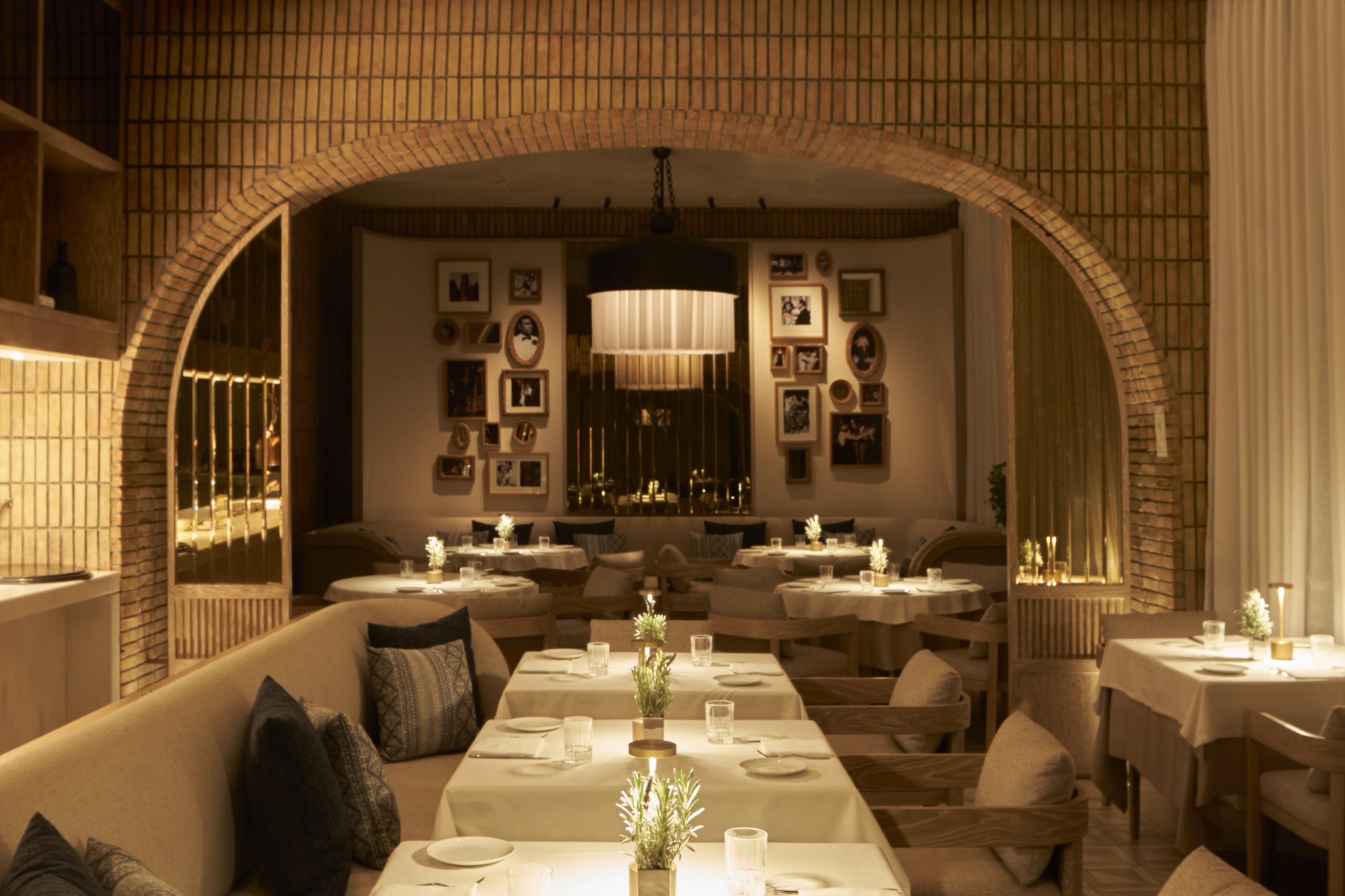
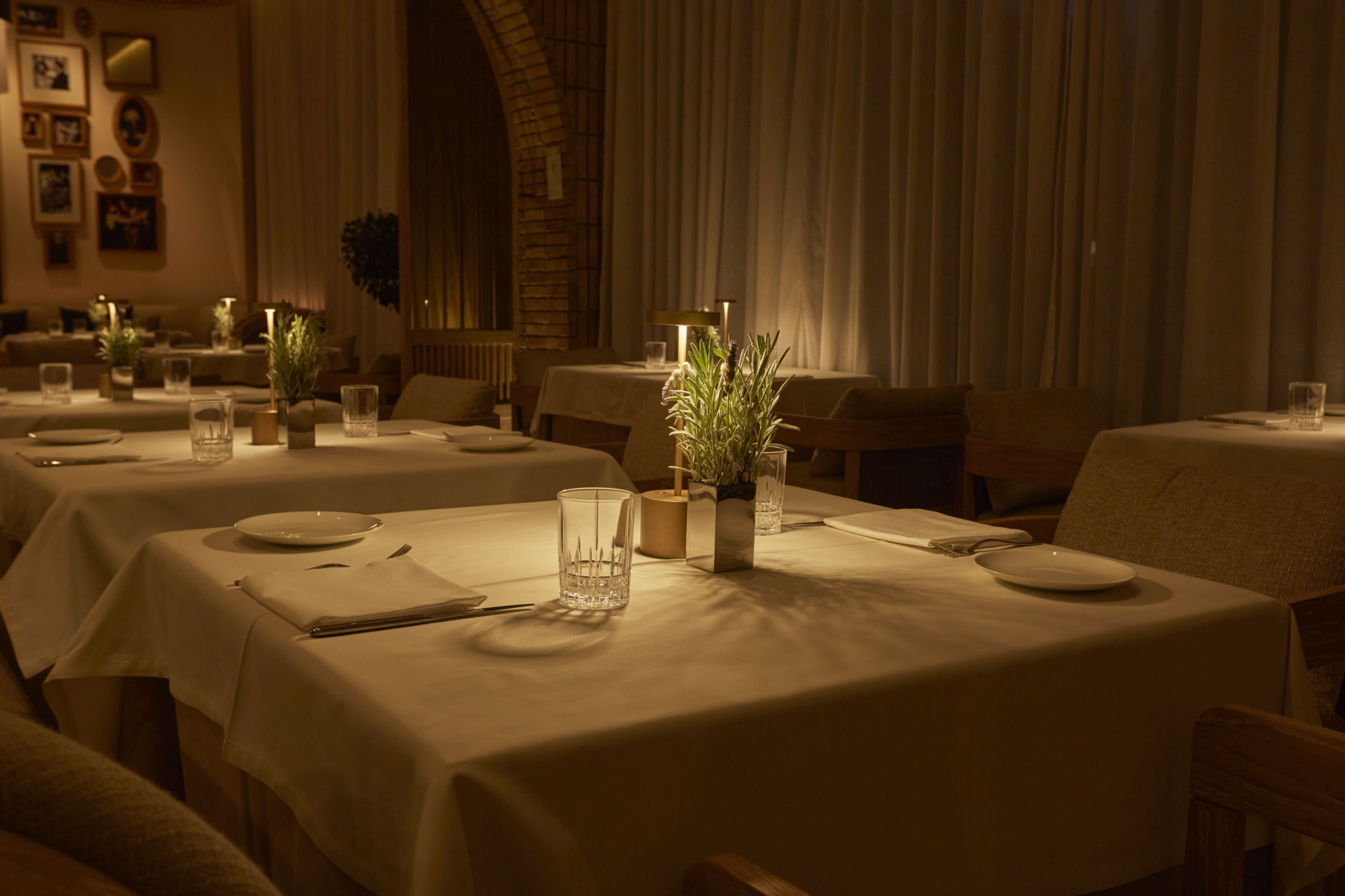
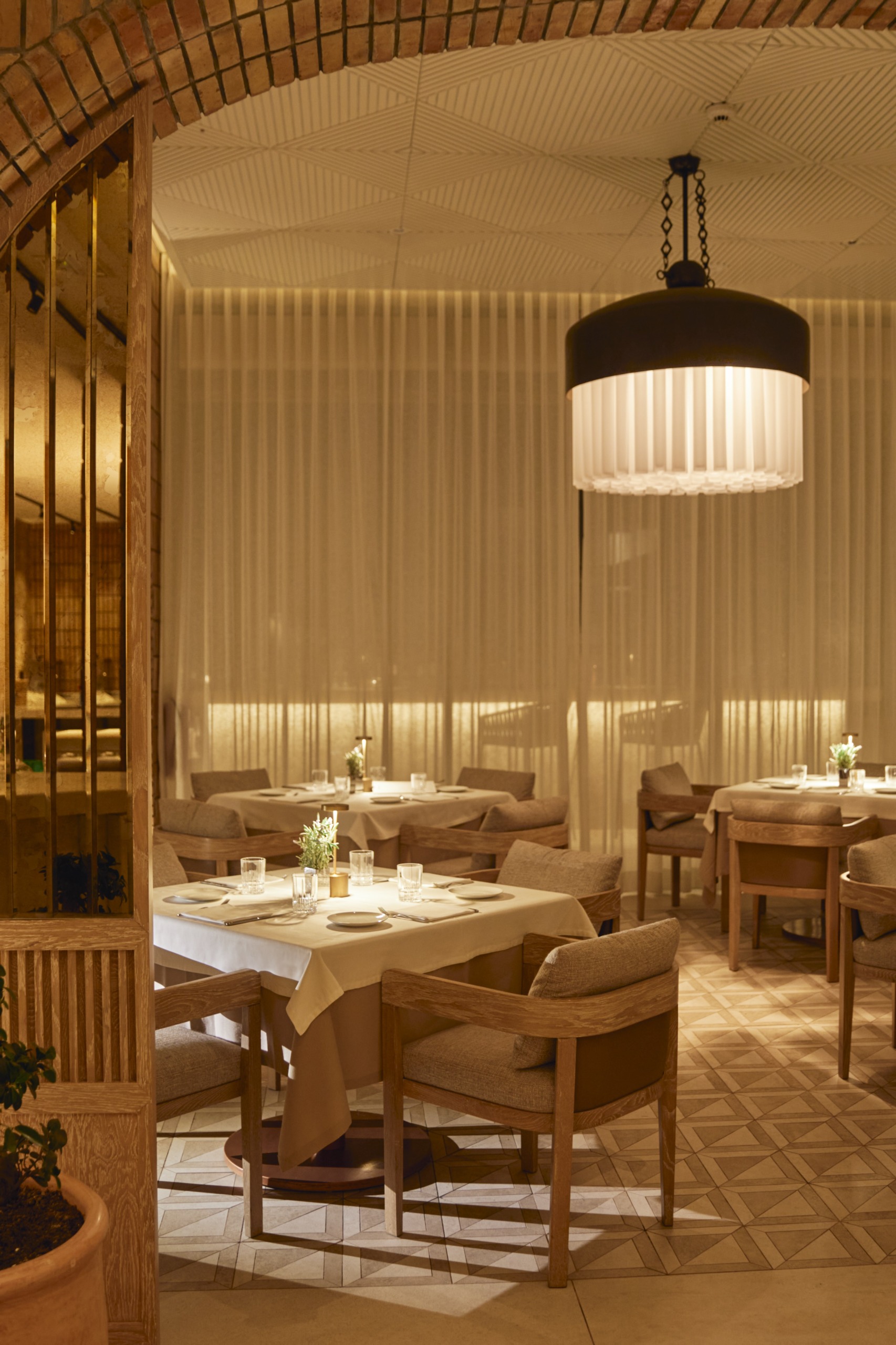
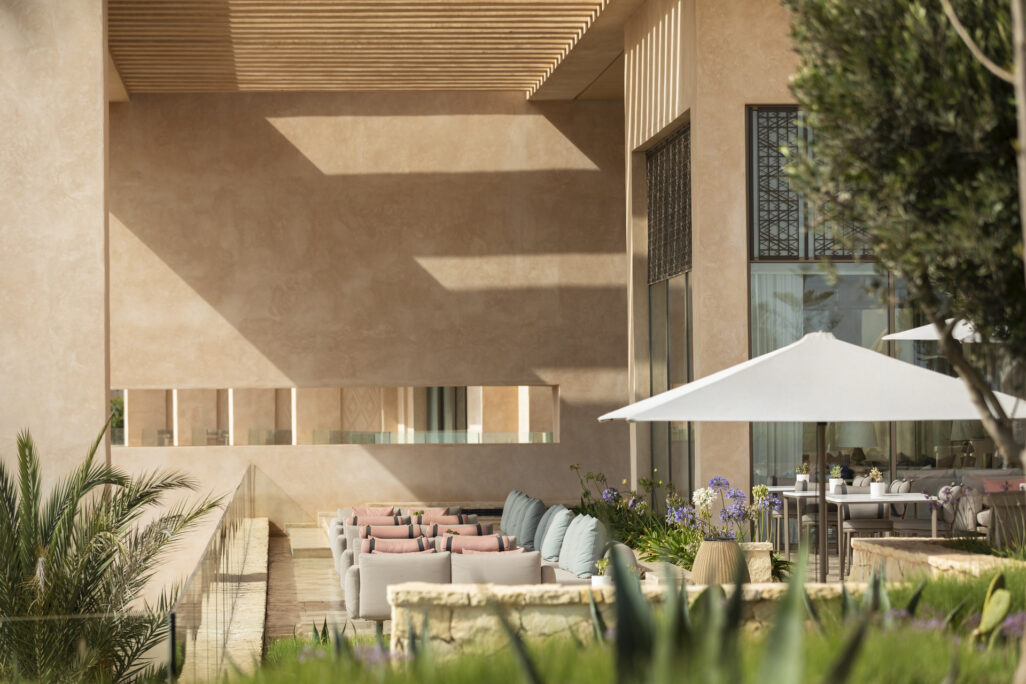
Paper Moon at Fairmont Taghazout
At a glance
Beyond the Brief: Storytelling and the Importance of Crafting Food and Beverage Experiences examines how narrative, cultural authenticity, and craft are applied to hospitality food and beverage design. The piece draws on completed projects including Spuntino at Four Seasons Resort and Residences at The Pearl in Qatar, Paper Moon at Fairmont Taghazout in Morocco, and Onu at Giza Palace, arguing that storytelling grounded in place, culture, and material specificity is the foundation of commercially and experientially successful dining environments.
The Heartbeat of the Dining Experience
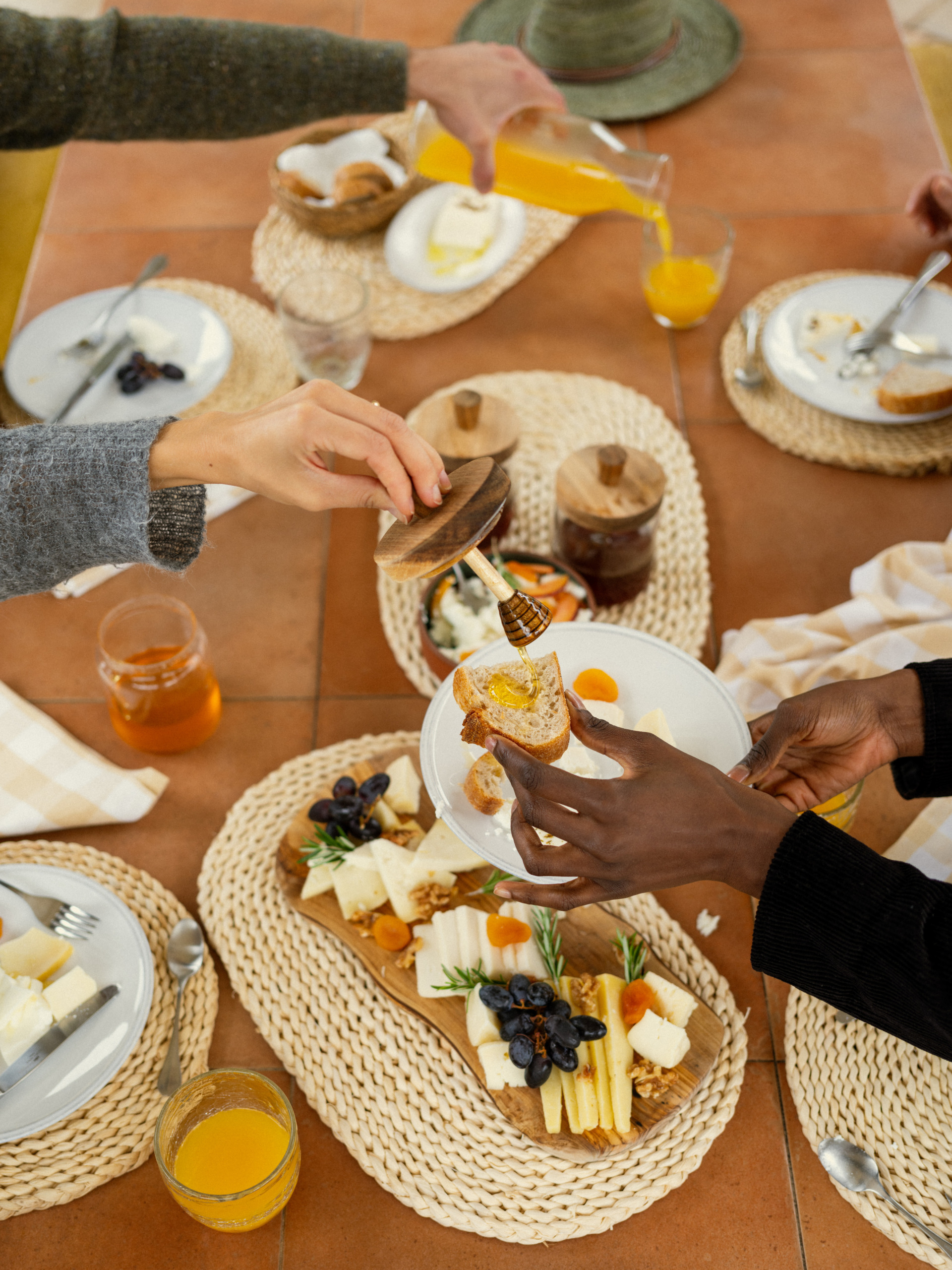
When I reflect on some of my most cherished memories, many of them are tied to the rituals of family meals. Growing up in Australia to proud Sicilian immigrants, I straddled two worlds: one full of new opportunity, the other rooted in tradition. What once felt awkward became what defines me.
At the time I didn’t want everyone at school to know that it was that weekend, the one at the end of every summer where the whole family would gather to make a year’s supply of passata to get us through those dreary winter months, but now it’s one of my favorite stories to tell. Nonna was always on tomato washing duty, Dad led the charge on the bottling process and one of my (small) contributions was to add salt and fresh basil to every bottle – this introduction to basil is probably why Liguria in northern Italy is one of my favorite places to visit and why I got married there a few years ago – to drown in the freshest pesto from local Genovese trattorias.
As my passion for Food and Beverage design has grown with me, it obvious that this love stems from amazing experiences that I have continued to seek as an adult. What made my early moments so special wasn’t just the food itself, but also the stories, memories and traditions that were shared. These stories were a celebration and gave meaning to what we were eating; a narrative grounded in history, culture and emotion.
Now, as I enter a bar or restaurant, I want to understand the story being told not only through food but the overall experience. Storytelling is not an add-on to dining; it’s the heartbeat of creating exceptional experiences.
“Storytelling is not an add-on to dining; it’s the heartbeat of creating exceptional experiences. ”
Storytelling by Design: Shaping Concept and Identity
Did my Great-Aunt just roll a pillowy soft ball of dough over a fork to get delicate grooves in her gnocchi that hold the sauce so perfectly? The first time I witnessed this, it was that ‘ah-ha’ moment – of a tiny yet incredibly purposeful gesture. Food and Beverage spaces are places of convergence: of culture, cuisine and craft. When I sit down to think about a design concept, there is always one simple question: What is the story we want to tell?
It usually starts with something so simple, like gnocchi rolling, that can spark your imagination to unlock the rest of the story, informing guest interactions, color palette and even smell and sound.
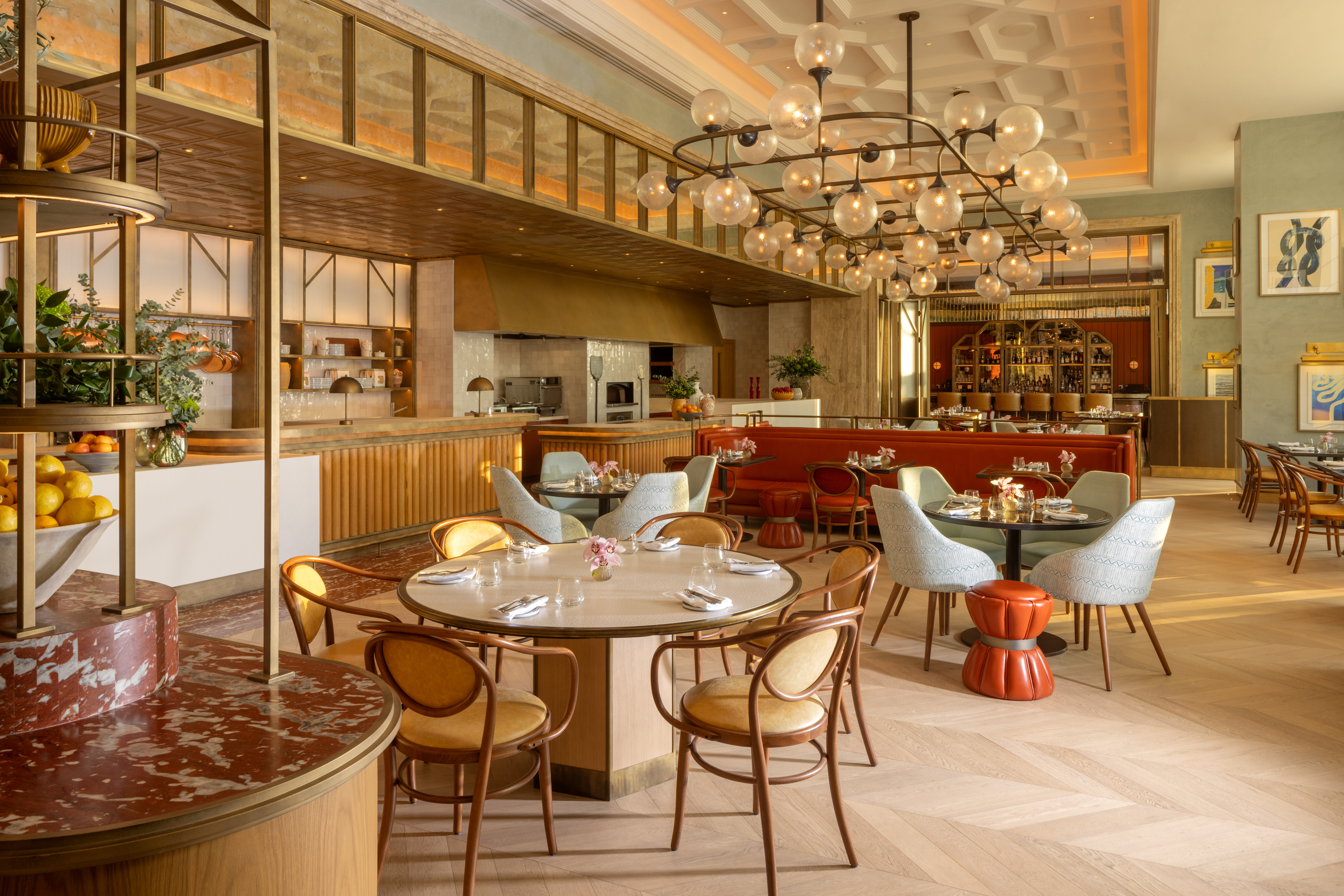
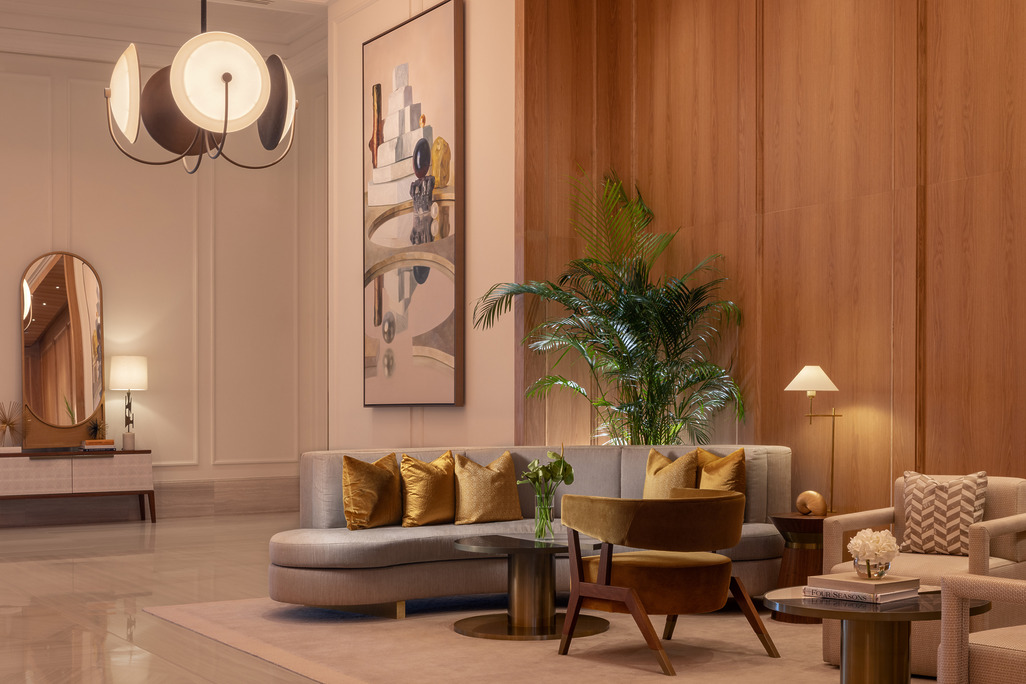
A great example of how this process plays out can be seen in our work at Spuntino in the Four Seasons Resort & Residences at The Pearl, Qatar. Stemming from the simple idea of socializing, through an “Italian” lens, led us to think about the connection to coffee culture and the smell of espresso, the vibrant Italian pantry of “essential ingredients” and the celebration of aperitivo. We leaned into this, using regional materials and subtle storytelling cues that communicate the spirit of Italy.
A nod to my Great-Aunt is also evident in a recent concept we have developed at the Four Seasons Sharm El Sheikh. As a renovation, the existing interior architecture naturally lent itself to a glamorous Amalfi Coast-inspired story. To build upon this, we created a theatrical pasta-making kitchen (to watch the fork-rolling action take place). We also considered the high import duties on alcohol in this region and created a space where the restaurant could make its own Limoncello, something my mum has also taken to making herself as of late.
“When I sit down to think about a design concept, there is always one simple question: What is the story we want to tell? ”
The Evolution and Authenticity of Luxury Dining
The perception of “luxury” has shifted, with authenticity taking center stage. Authenticity isn’t just about what’s on the menu – it’s about how the space and experience feel and the how the interactions make an impression. Guests are increasingly well-travelled and will recognise cultural influences. If it’s authentic, the design connects on a deeper level and amplifies the story behind the food.
On a recent trip to the Greek island of Sifnos to celebrate my first wedding anniversary, I had one of the most incredible, luxurious meals in recent years. Featuring a chef’s menu focused on seasonality and a dining experience where the experiential sequence was the element of design; this was truly a celebration of authenticity.
The evening was curated as soon as we arrived. Walking down a huge flight of stairs at sunset, across a beach of boulders to a dining terrace perched over the sea to the sound of crashing waves; I was greeted by low level lighting, locally made Greek ceramics, contemporary crafted furniture with Greek stone and an informative introduction to each course from an open kitchen. The attention given to the produce and guests was the true luxury. At the end of the meal, chef Giorgos came to the table to thank us for coming and we meandered back across the beach; a memory that I won’t forget.
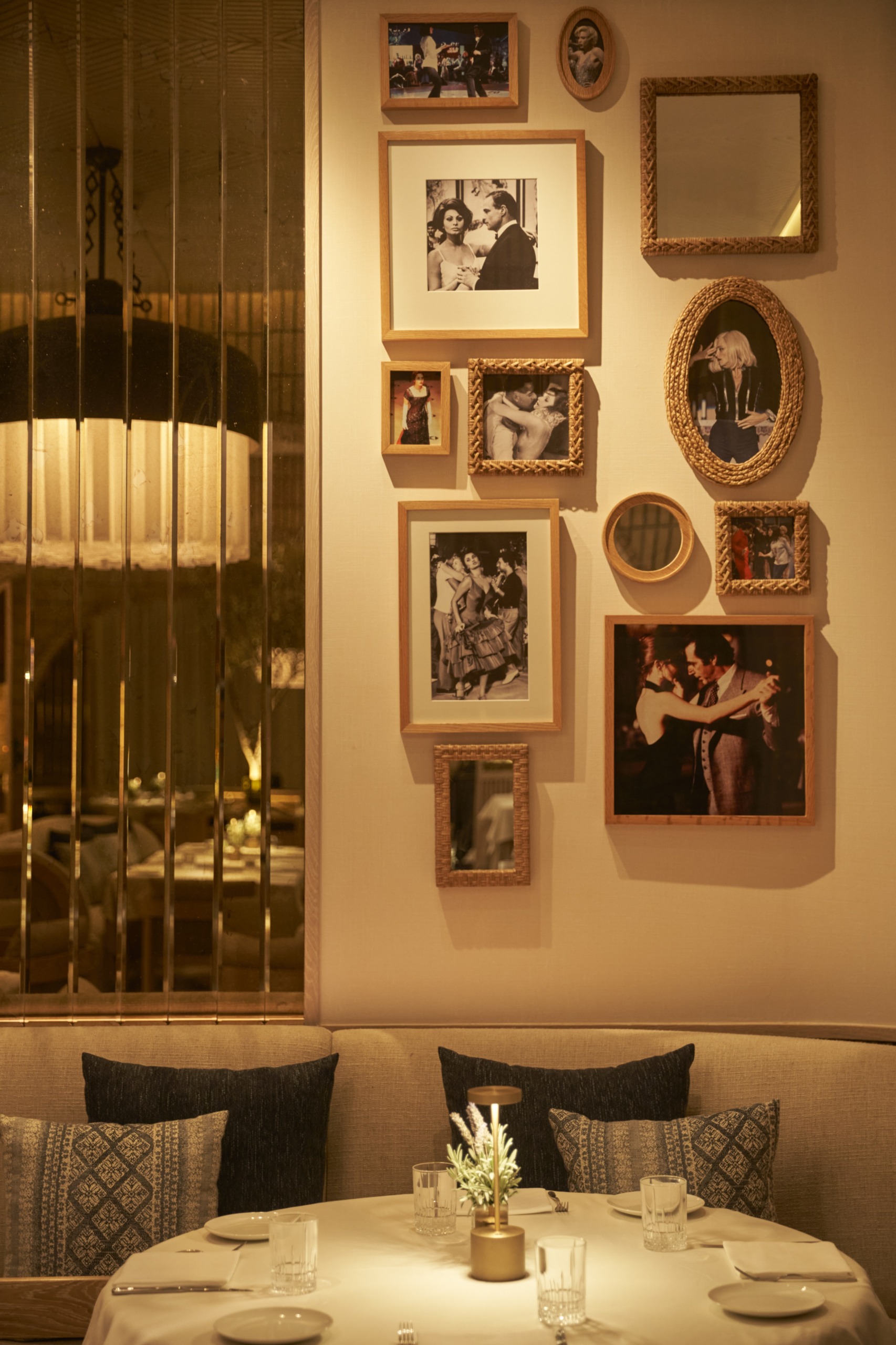
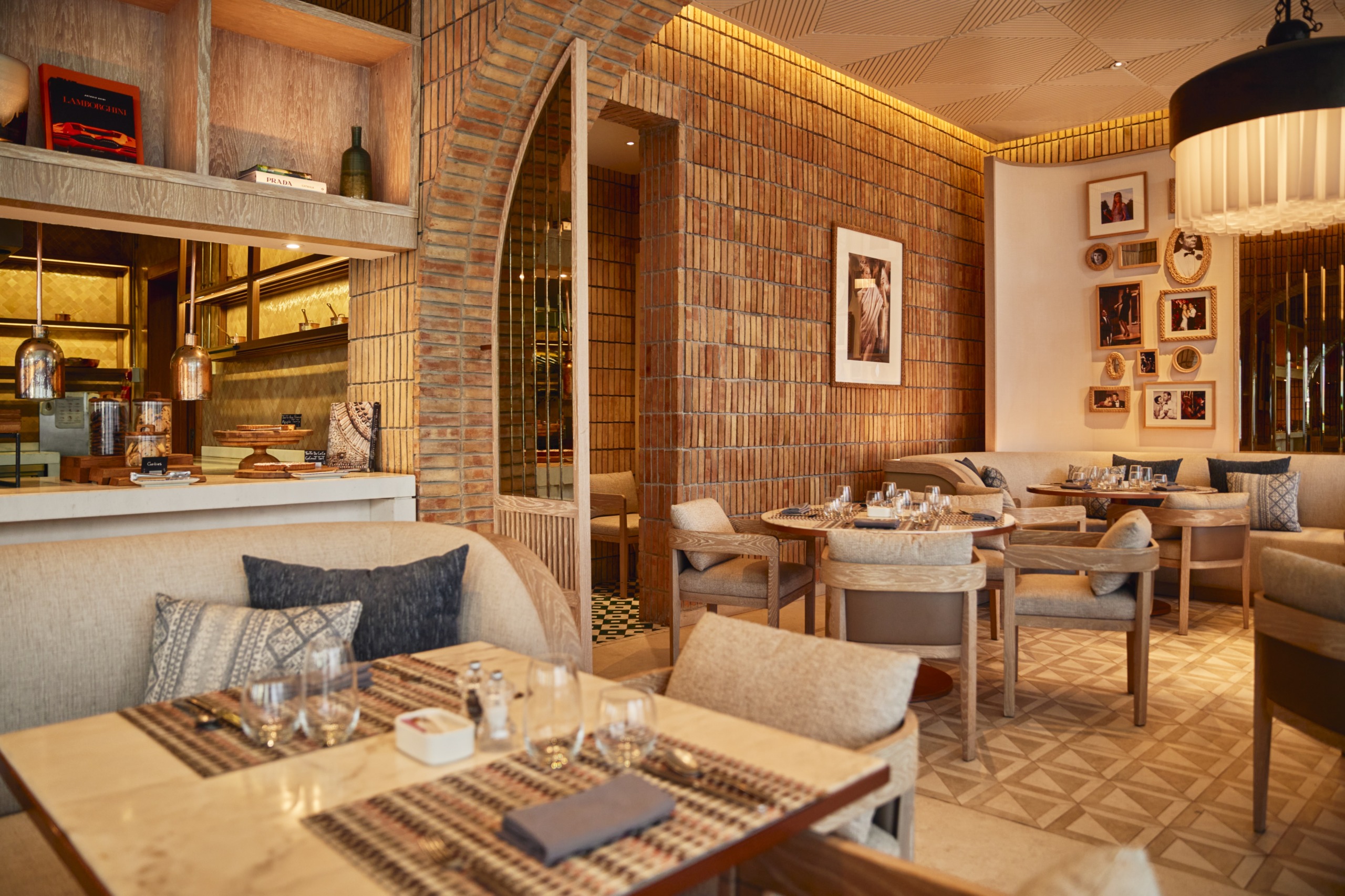
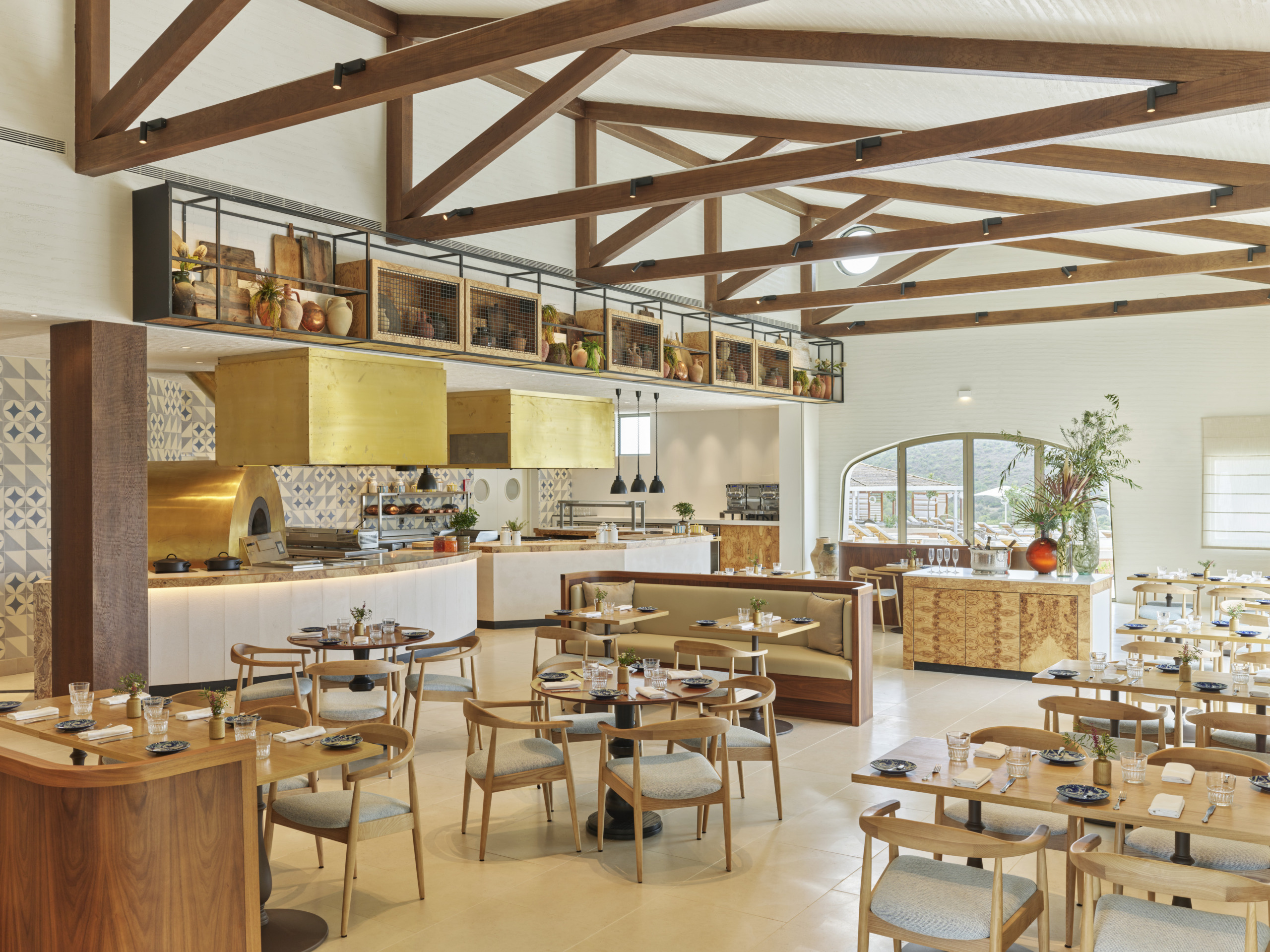
These are the authentic moments that we strive to choregraph each time we approach a new concept. In Paper moon at Fairmont Taghazout in Morocco, for example, we carefully blended local Moroccan craftsmanship with northern Italian flair, to honor the brand’s Milanese roots. By combining these two identities we created a space that tells a dynamic story of cross-cultural fusion, without being thematic. Tactile materials and patterns as well as open kitchens are a main feature of the experience, with each table within close proximity to theater, to encourage that conversation with the chef at the end of your meal.
“The perception of ‘luxury’ has shifted, with authenticity taking center stage. ”
Bar Design: From Day to Night
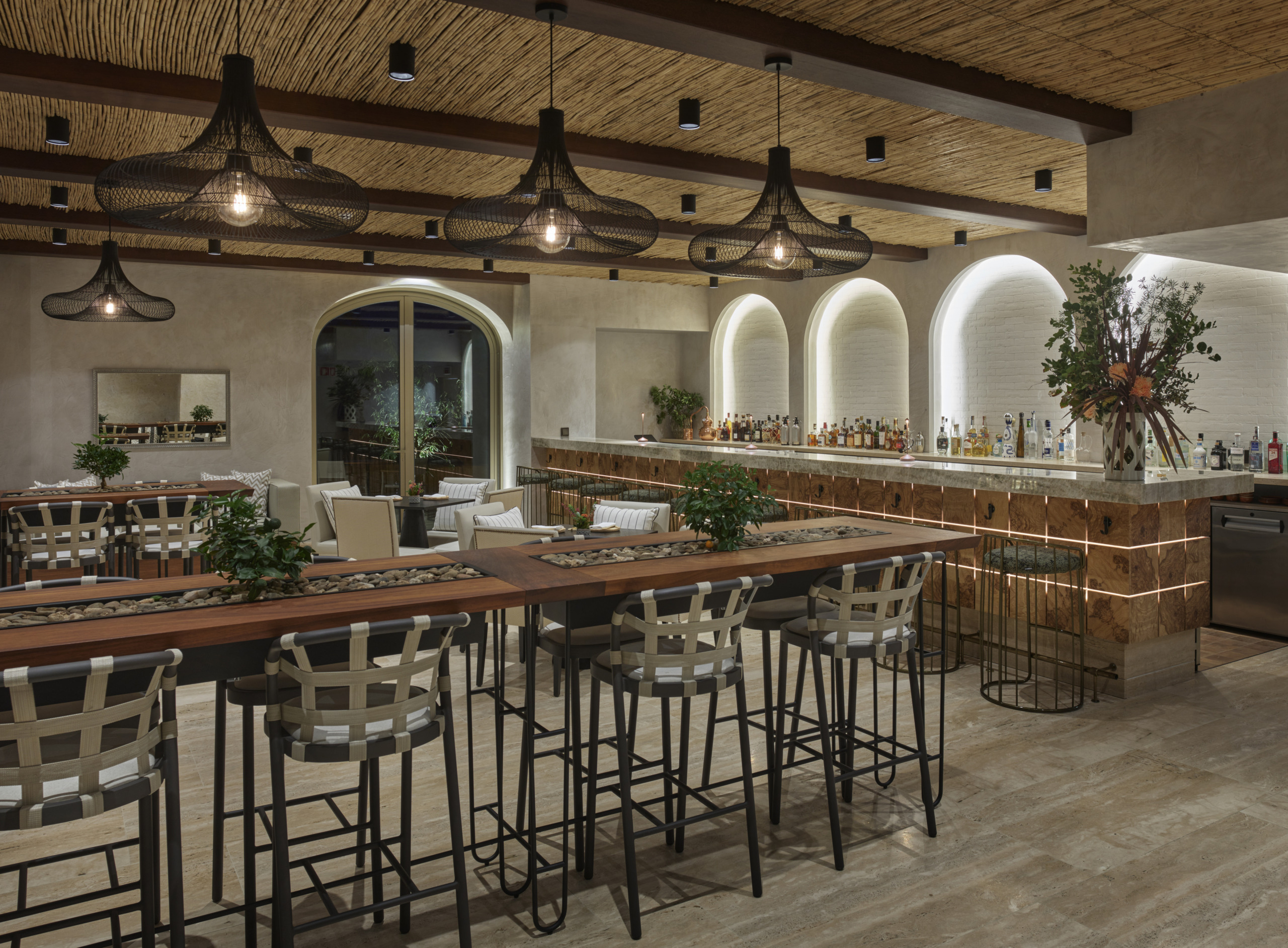
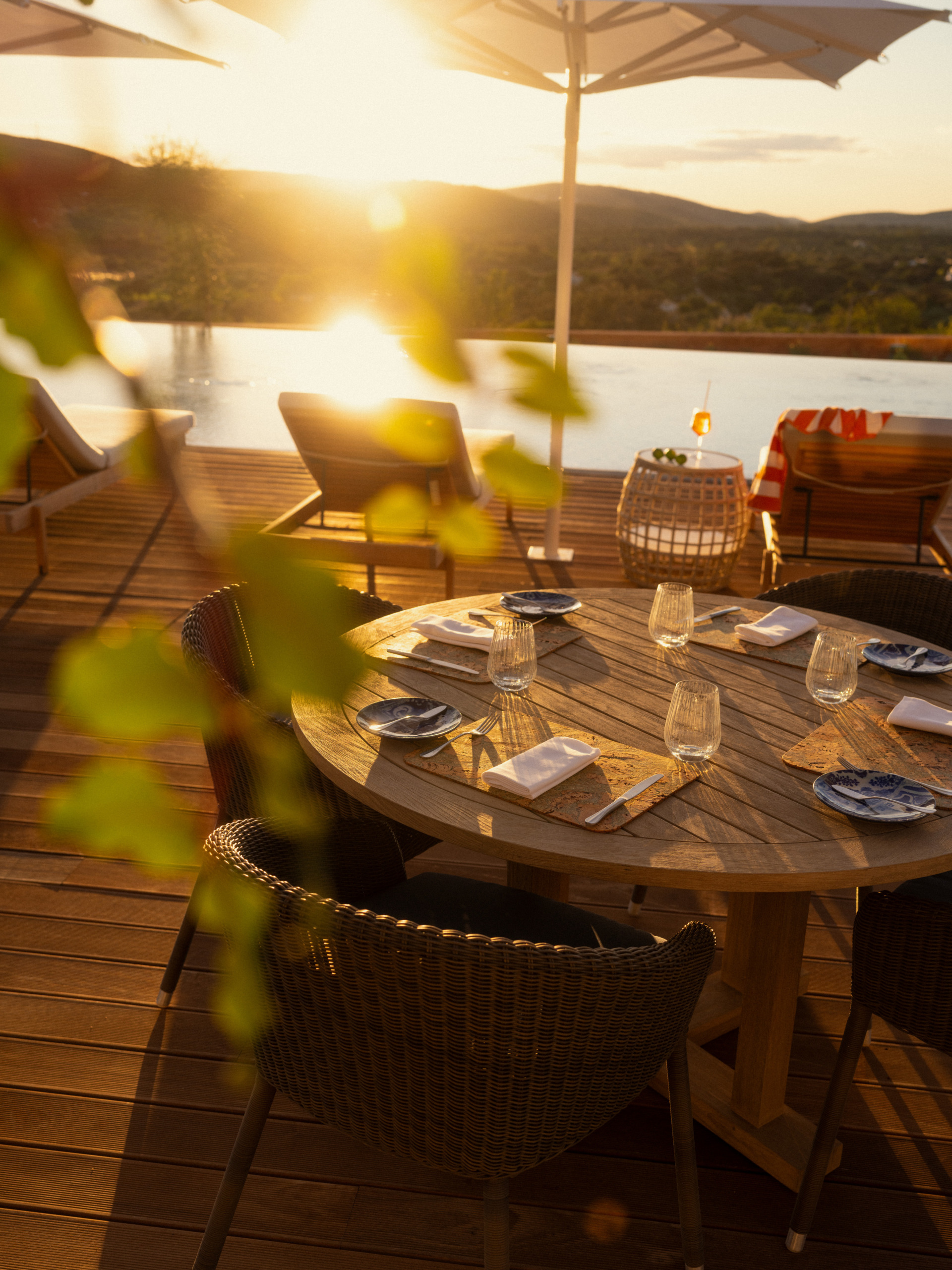
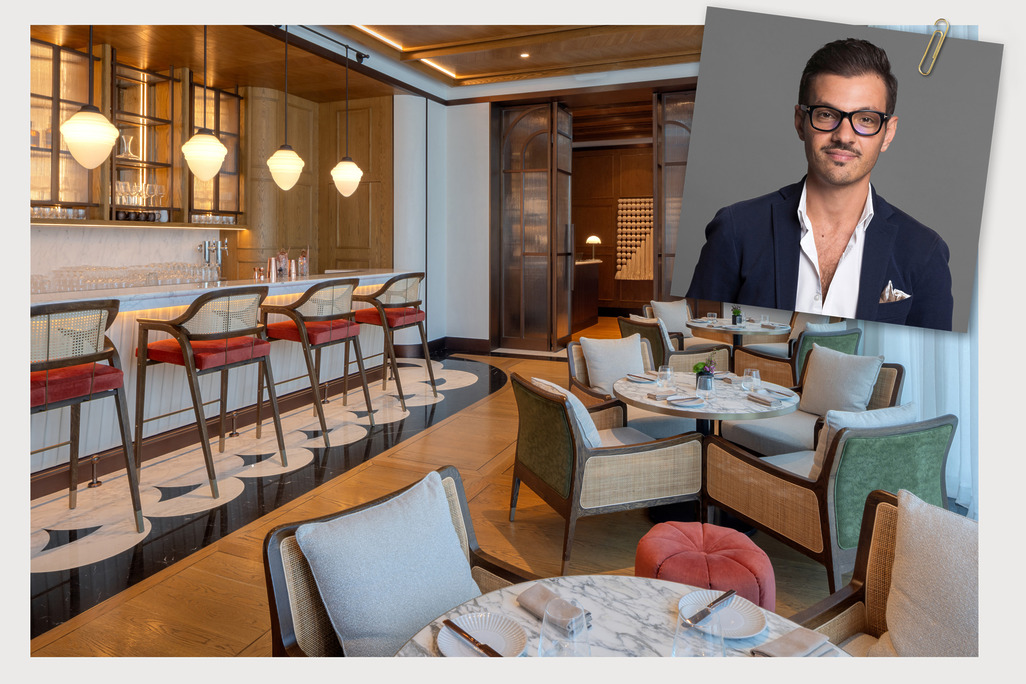
As a millennial, I’ve visited a lot of bars in my time. Regardless of where I am in the world, the ones that always make an impression are those that are intimate and vibrant, yet cozy. What makes designing a bar more complex than a restaurant is that in many settings, there’s the added challenge of creating a space that transitions from day-to-night. A bar also offers an important interactive moment – guests talk to the bartender or strike up a conversation with another guest. It should feel buzzy, alive, and the design must reflect that spirit of connectivity.
Changes in attitudes toward alcohol are also making us rethink bars. It’s no longer just about replicating the nightclub-style cocktail experience. Increasingly, like restaurants, the focus is on theatre and storytelling, whether that’s highlighting a local distillery, creating a garden bar, or showcasing house-made ingredients – each of which adds to that sense of vibrancy.
“A bar should feel buzzy, alive, and the design must reflect that spirit of connectivity. ”
The Future of F&B Design
It’s funny to think that my grandmothers flocked floral wallpaper could one day inspire the interiors of a restaurant, but lately there’s been a growing shift towards maximalism and escapism. F&B experiences are being dialed up to create bold, immersive environments. Guests no longer want subtlety when they step into a space, they want to be transported instantly and unmistakably into a new world.
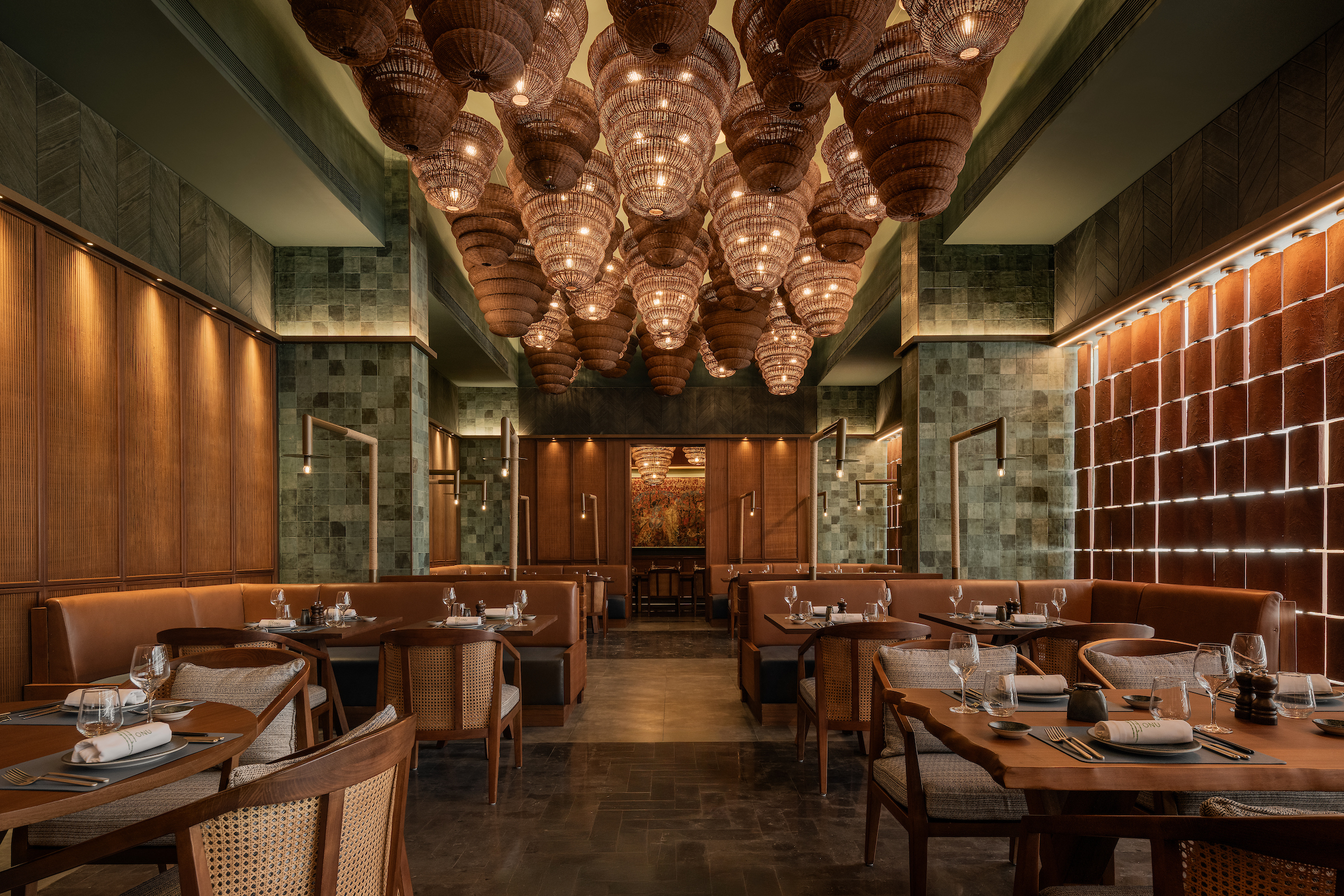
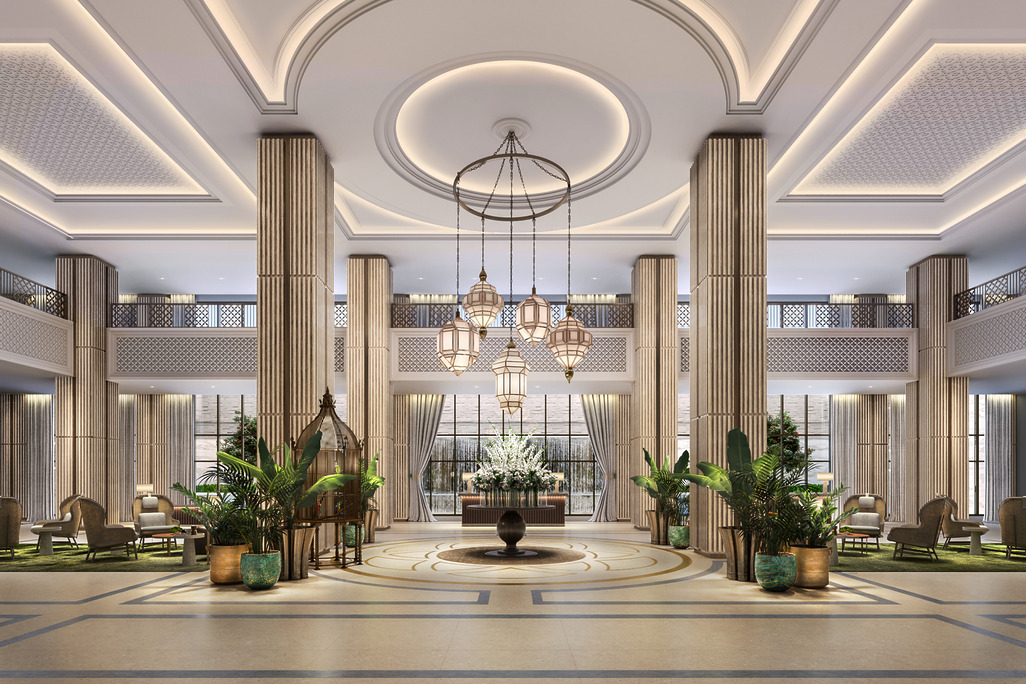
What makes these spaces immersive – rather than kitsch – is that the references inspire the design, they don’t feature, and authenticity is still key. At Onu, a Pan-Asian restaurant at Giza Palace, the concept drew deeply from the vibrancy of Vietnamese street markets, expressed through a dramatic basket-inspired installation. At the Four Seasons Luxor, the inspiration shifts to Sicily, where the interiors draw on baroque architecture layered with hand-painted ceramics, richly styled accessories, and tableware rooted in traditional Sicilian craft.
Both spaces engage guests fully in the story being told, allowing them to escape into a world created just for them, and without a visible scrap of that flocked wallpaper.
See more from Damien
Damien Follone
Damien Follone brings passion for storytelling as well as a wealth of architectural and interior design experience to the Wimberly Interiors team. His design approach and critical thinking ensure that each project is strategically positioned from concept through to delivery with emphasis on hotel food and beverage experiences.
See more from Damien
Damien discusses the design journey of the Waldorf Astoria Lusail
[0:06]
Damien Follone, Associate Principal — Wimberly Interiors
We were really inspired by the Waldorf Astoria brand when we created the Bywater restaurant here. Our architecture team at WATG had already begun planning the restaurant space, but the collaboration we developed together was truly incredible. We had the opportunity to move columns around and really create the restaurant from the inside out.
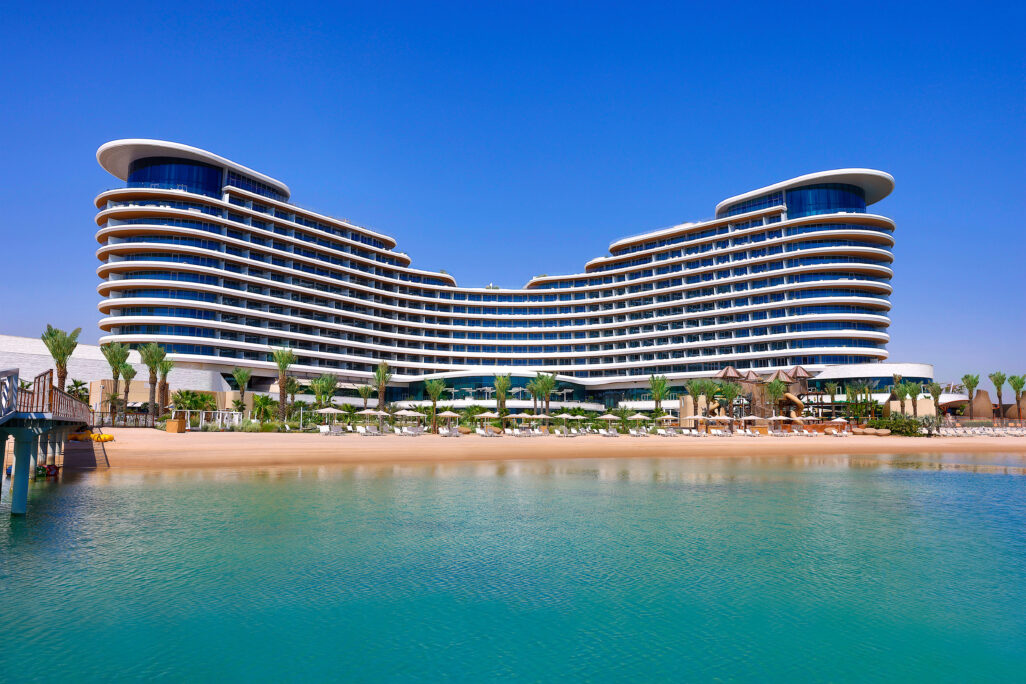
The building is curvaceous, sinuous, and quite sculptural — which is an incredible design opportunity, but it also brings its challenges. We responded to those curves, though designing a functional dining experience within a circular space does present real difficulties.
[0:49]
Another challenge was the curved wall of glazing, which lets in a tremendous amount of natural light. We wanted guests to be able to look out onto the pool and terrace, and we really wanted to allow that natural light to flow into the space and create different atmospheres across different dining experiences.
There are bold black and white graphic moments throughout — in the stone flooring and in some of the joinery. Layered on top of that is a color palette drawn from what you see across Qatar: the desert landscape, the desert vegetation, and that sun-bleached quality brought into the restaurant interior.
[1:34]
When we started to think about the sequence and experience through the space, we focused on creating moments of light and shadow. As guests arrive, the first moment is a really intimate, timber-lined space. They then move through to a beverage experience — tea, Arabic coffee, fresh juices — before continuing into the main dining room, where they are held between the animated kitchen and the views out onto the terrace and pool. This is where the buzz of the restaurant lives. Finally, the signature private dining room offers something altogether more intimate — the feeling of a dinner party.
[2:20]
The Wimberly Interiors signature is really evident here. We approach every project — large or small — with a deep understanding of the identity and personality of the space, as well as the brand aspirations we are working towards alongside our client and our working relationship with Aldo. The story behind this project was truly remarkable. We had built a great deal of trust and faith in the narrative we had told, bringing both the client and the brand on that journey with us from the very beginning and throughout the five-year process. Not only did we earn their trust — we gave ours in return. And I think that is evident in the creation of this space and the significance of this restaurant.
- Inside WATG
Damien Follone: Crafting Stories Through Design
- Africa
Fairmont Taghazout Bay
- Middle East
Four Seasons Resort and Residences at The Pearl
- Middle East
Giza Palace
- Middle East
Waldorf Astoria, Lusail
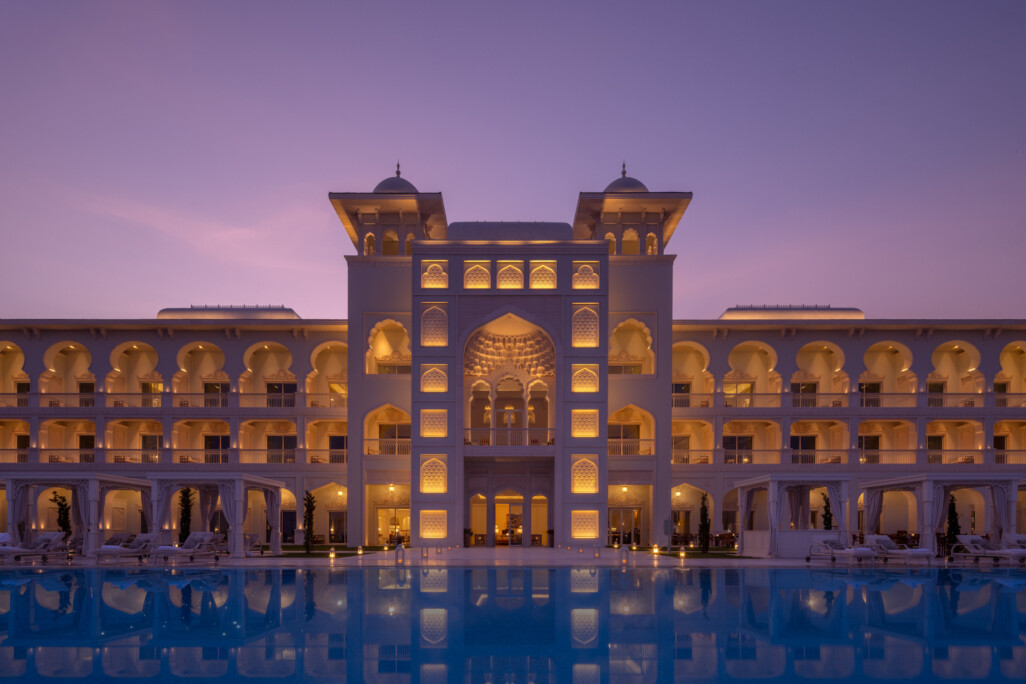
- Middle East
Chedi Katara
About The Author

Damien Follone
As a senior designer in restaurants and bars, Damien’s design approach ensures that each project is strategically positioned from concept through delivery.
Latest Insights
Perspectives, trends, news.

- Design + Innovation
The Future of Design Education
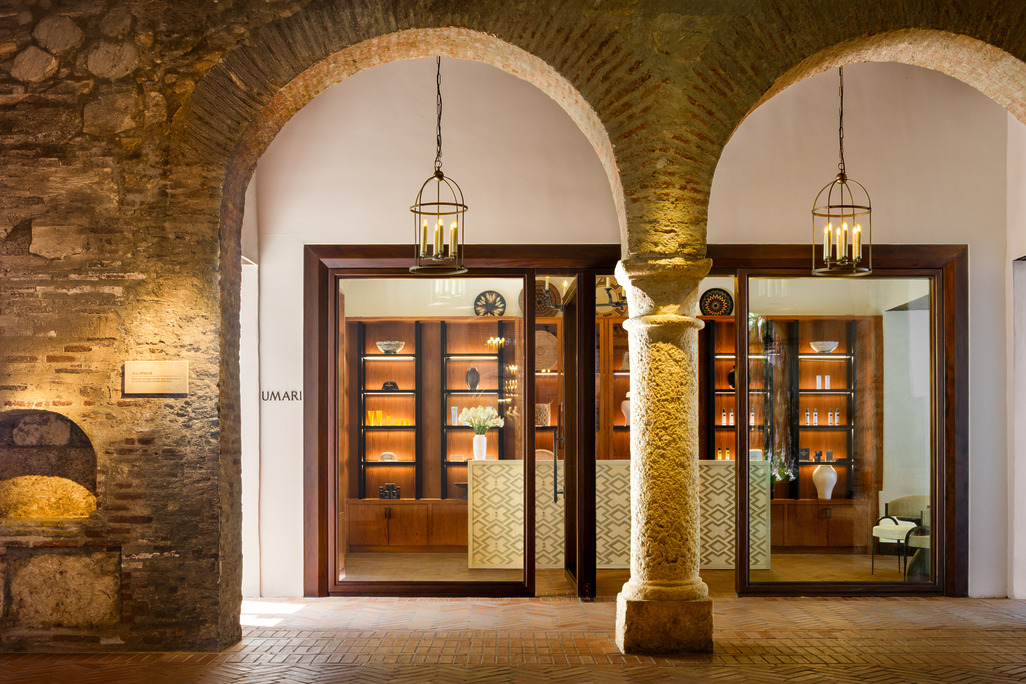
- Project Stories
Connecting Historic Preservation and Wellness Design
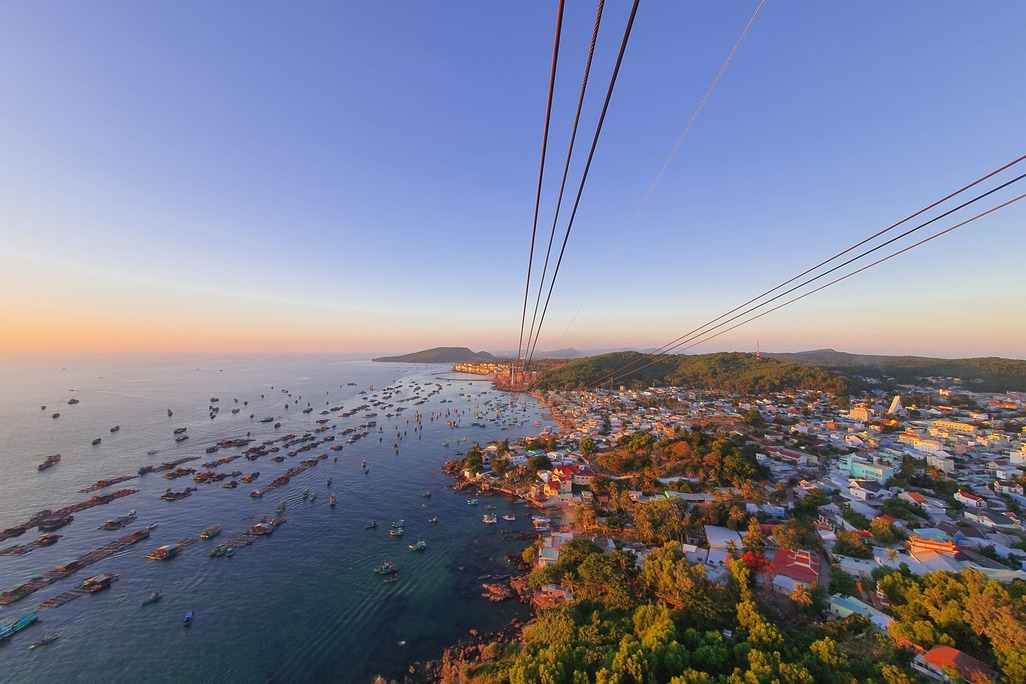
- Strategy + Research
Phu Quoc at a Turning Point: Lessons for Long-Term Island Planning
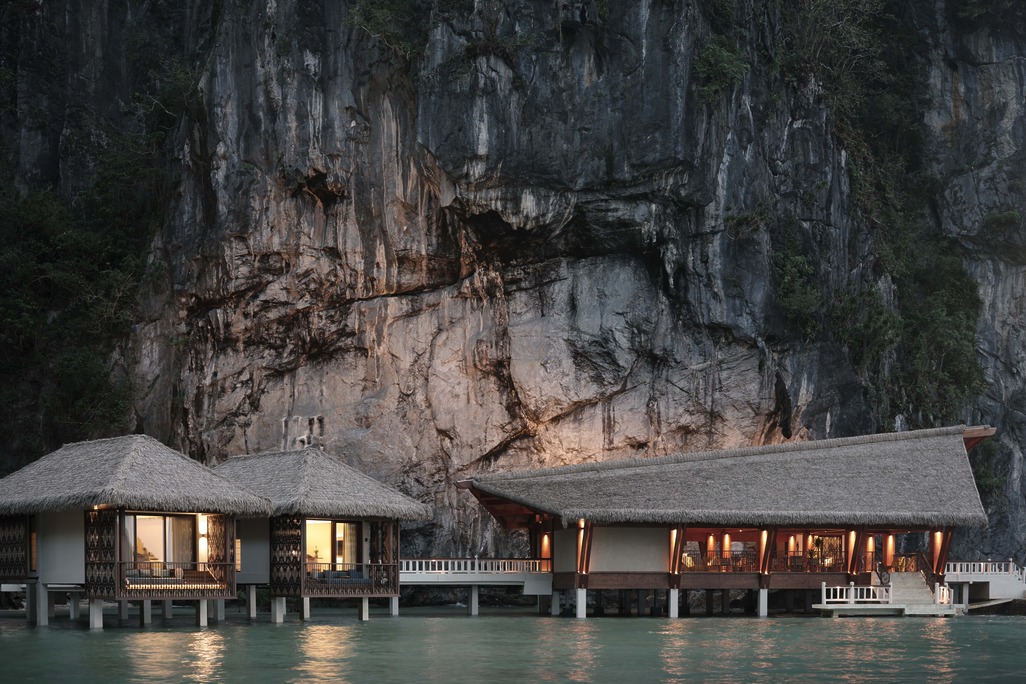
- Design + Innovation