- Middle East
MARAFY
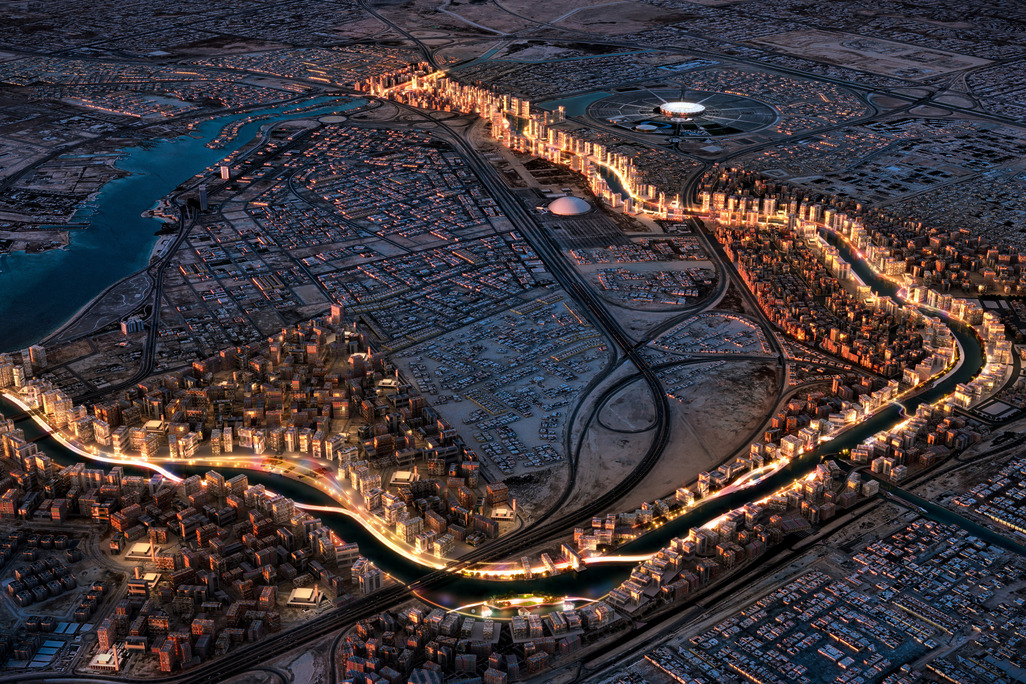
MARAFY brings Saudi Arabia's first navigable urban canal to Jeddah, a 10+km waterfront linking homes, hotels, and retail.
A collaboration between our architecture, landscape and interiors studios, this luxury hotel rises and falls elegantly, with smooth, simple curved forms inspired by flight.
Waldorf Astoria Villas, Lusail is a collection of four ultra-luxury waterfront villas in Lusail, Qatar, situated adjacent to the Waldorf Astoria Lusail hotel. Architecture and landscape architecture were led by WATG, with interior design by Wimberly Interiors. The villas are arranged around a marina canal with uninterrupted water views, and share access to all hotel amenities via a connecting social pavilion. Architectural language draws on nautical forms, with curved balconies, brise soleil screens referencing historic Mashrabiya screens, and full-height glazing to the canal elevation.
Lusail, Qatar
66,300 sqm site, 429 keys, All-day dining restaurant
Architecture + Design Consultancy, Landscape Architecture, Wimberly Interiors
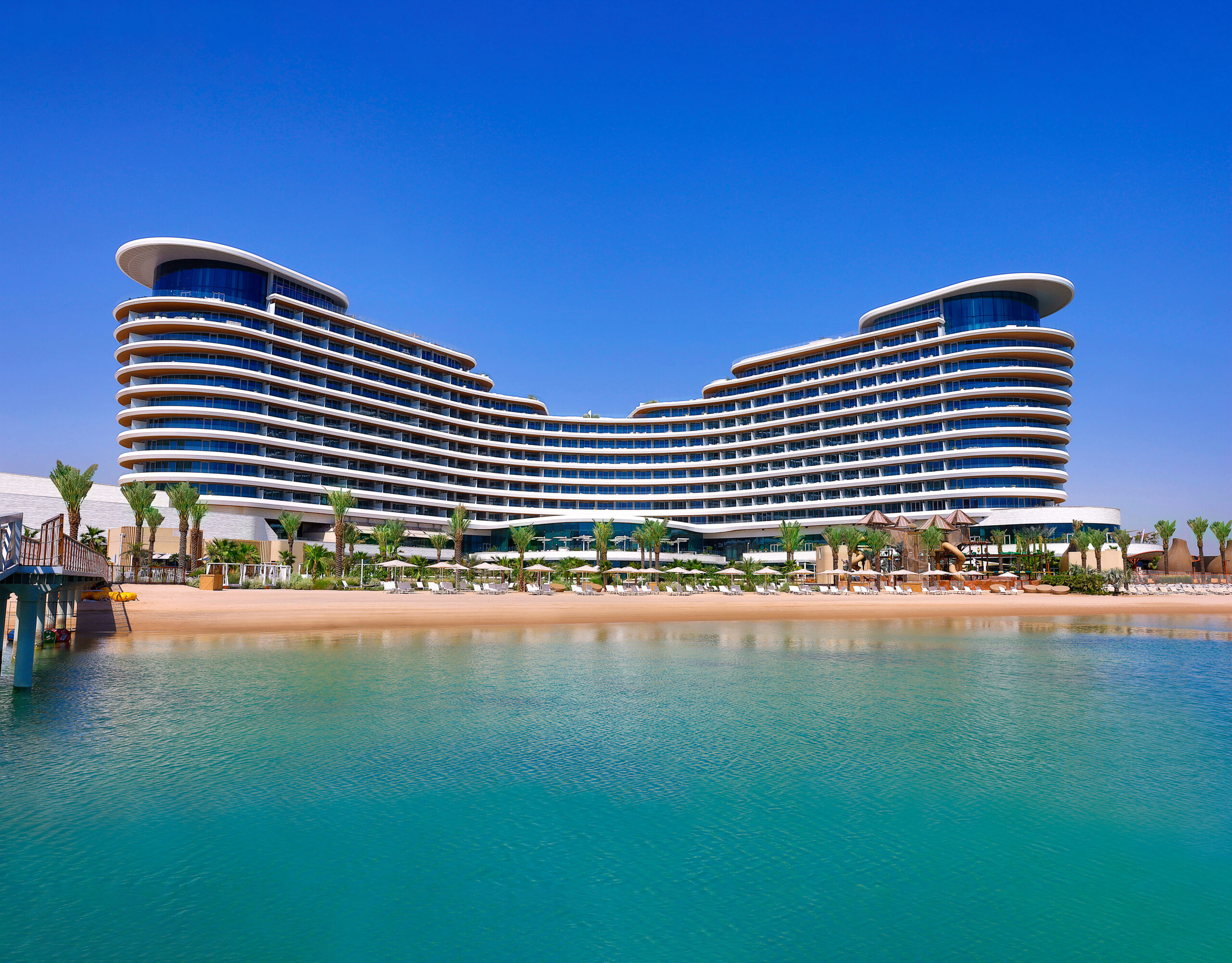
With an architectural form inspired by flight, WATG’s design of the Waldorf Astoria Lusail, Doha rises and falls elegantly, with smooth, simple curved forms. Reminiscent of the clean lines found in nautical design, the sweeping effect of the balconies generates a building form that is constantly animated – no matter the angle. The careful and intricate design of balustrades allows for a depth of stone sourced from the region that reduces and increases as it goes up the building. This very subtle change enhances elevation by diminishing the visuals which appear on all receding objects, resulting in an overall building composition that feels lighter and enhances the sweep of the curves. At entry-level, a lifted podium base frames an elevated arrival experience – connected to a seven-meter-high lobby lounge with glazed frontage that peers out to the sea beyond. Above, a beautiful peacock ceiling, designed by PYR, directs the gaze.
The expansive resort landscape, also designed by WATG, draws inspiration from the architectural curves and lines and blends this with the stylish and relaxed beachfront setting.
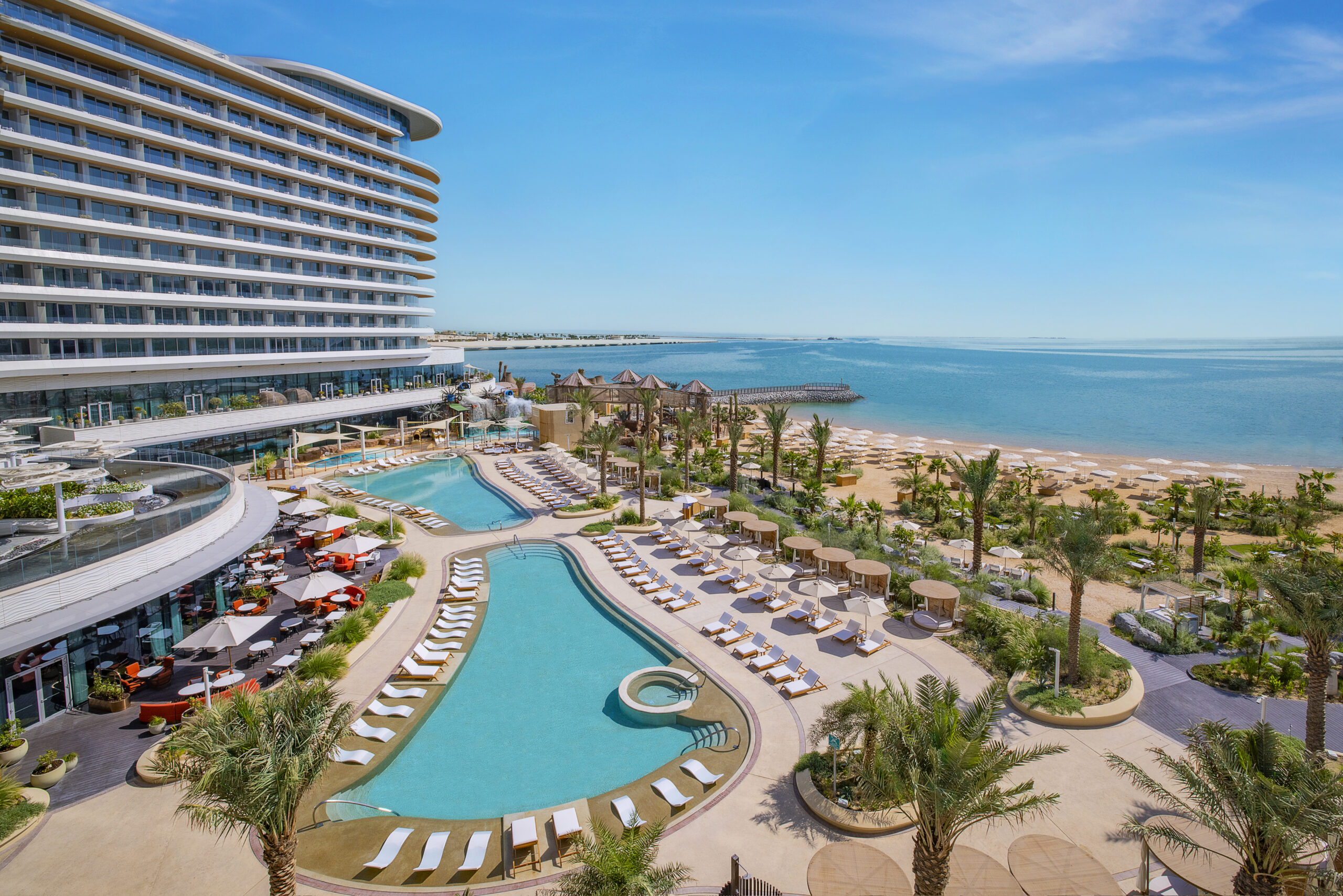
The expansive resort landscape, also designed by WATG, draws inspiration from the architectural curves and lines and blends this with the stylish and relaxed beachfront setting.
An extension of the interior, the landscape draws guests in through to the lounging areas and the private beach. There are three beachfront swimming pools – one for adults, one for families, and another for children – as well as the Aloha Surf Club with a dedicated FlowRider surf pool that invites guests to enjoy the waves and soak up the sun.
Additional landscape amenities include outdoor dining terraces, a large flexible event lawn opening out from the ballroom, beach kiosks, and a private jetty. The Wadi Lusail Waterpark features waterslides, play areas, and an adventure trail, as well as an outdoor playground and immersive Kunuz Kids’ and Teens’ Club.
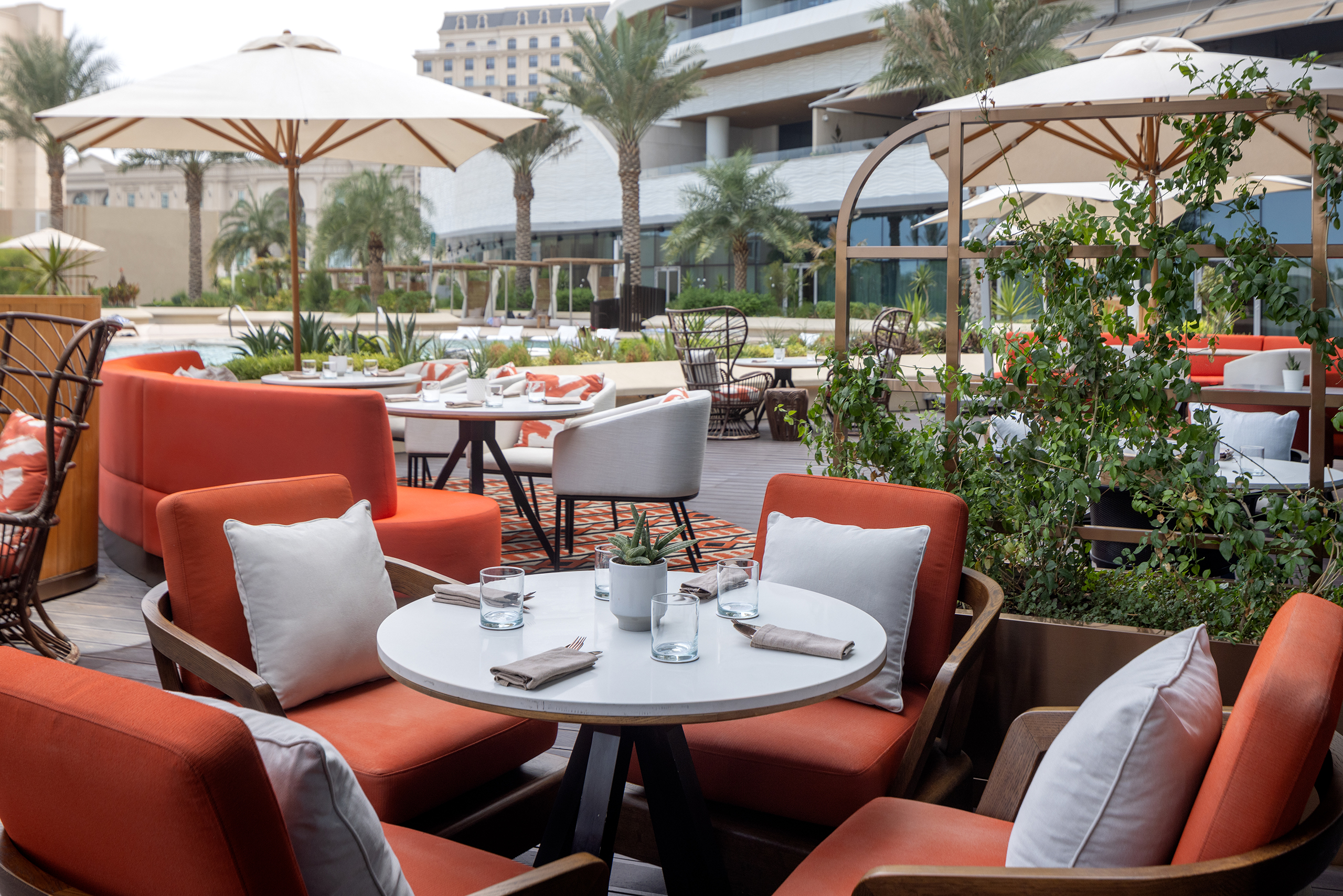
An extension of the interior, the landscape draws guests in through to the lounging areas and the private beach.
[0:06]
Damien Follone, Associate Principal — Wimberly Interiors
We were really inspired by the Waldorf Astoria brand when we created the Bywater restaurant here. Our architecture team at WATG had already begun planning the restaurant space, but the collaboration we developed together was truly incredible. We had the opportunity to move columns around and really create the restaurant from the inside out.
The building is curvaceous, sinuous, and quite sculptural — which is an incredible design opportunity, but it also brings its challenges. We responded to those curves, though designing a functional dining experience within a circular space does present real difficulties.
[0:49]
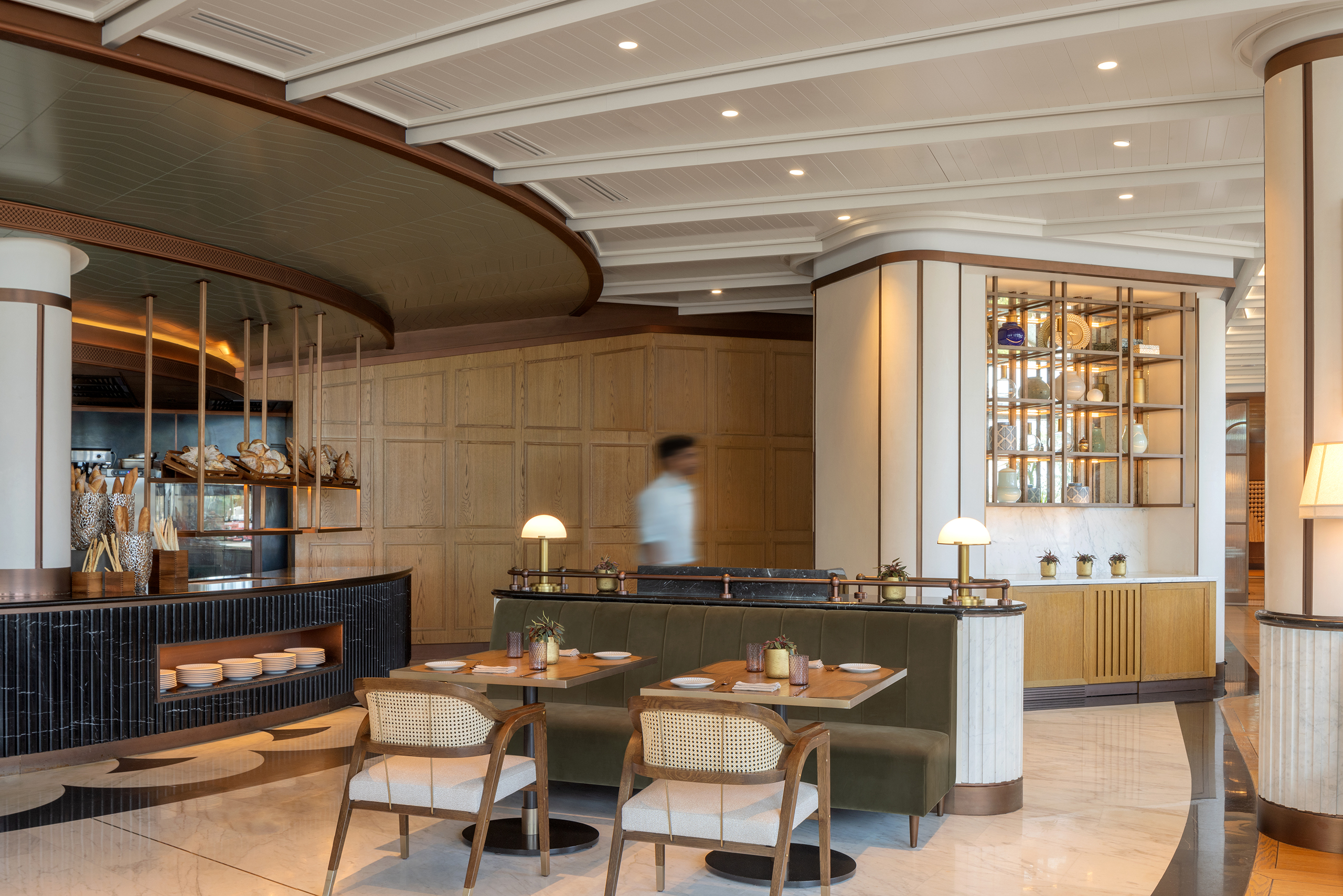
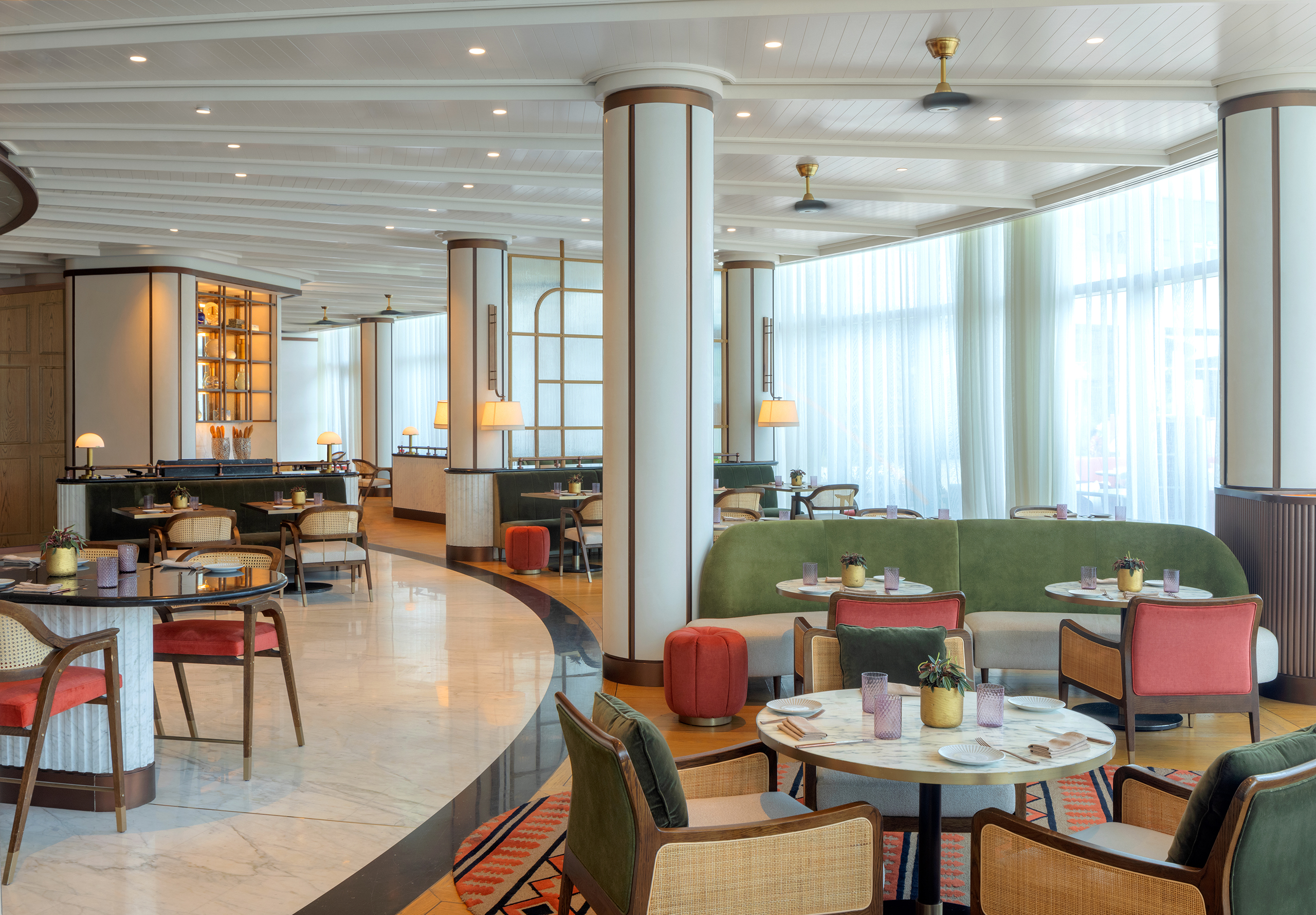
Another challenge was the curved wall of glazing, which lets in a tremendous amount of natural light. We wanted guests to be able to look out onto the pool and terrace, and we really wanted to allow that natural light to flow into the space and create different atmospheres across different dining experiences.
There are bold black and white graphic moments throughout — in the stone flooring and in some of the joinery. Layered on top of that is a color palette drawn from what you see across Qatar: the desert landscape, the desert vegetation, and that sun-bleached quality brought into the restaurant interior.
[1:34]
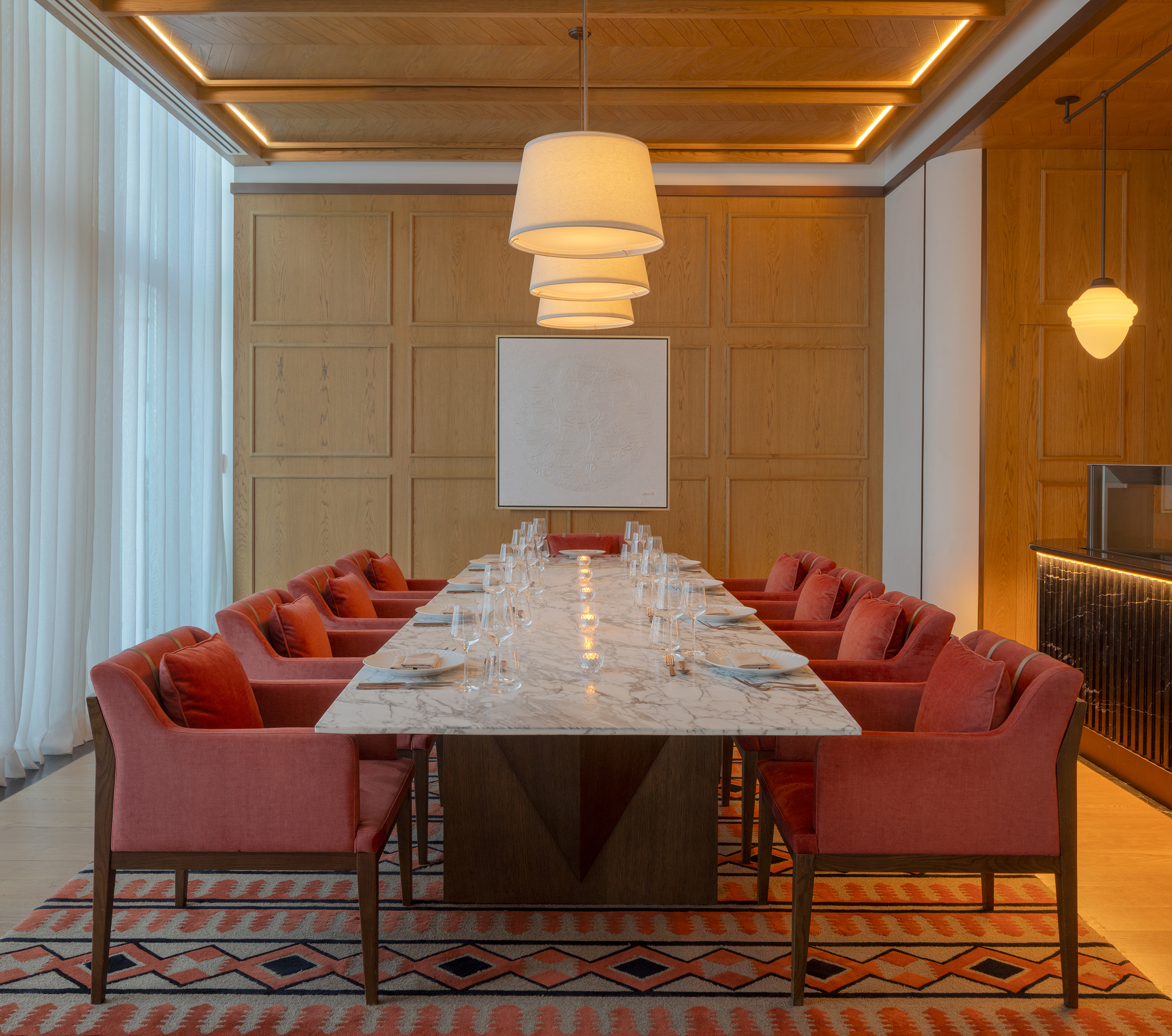
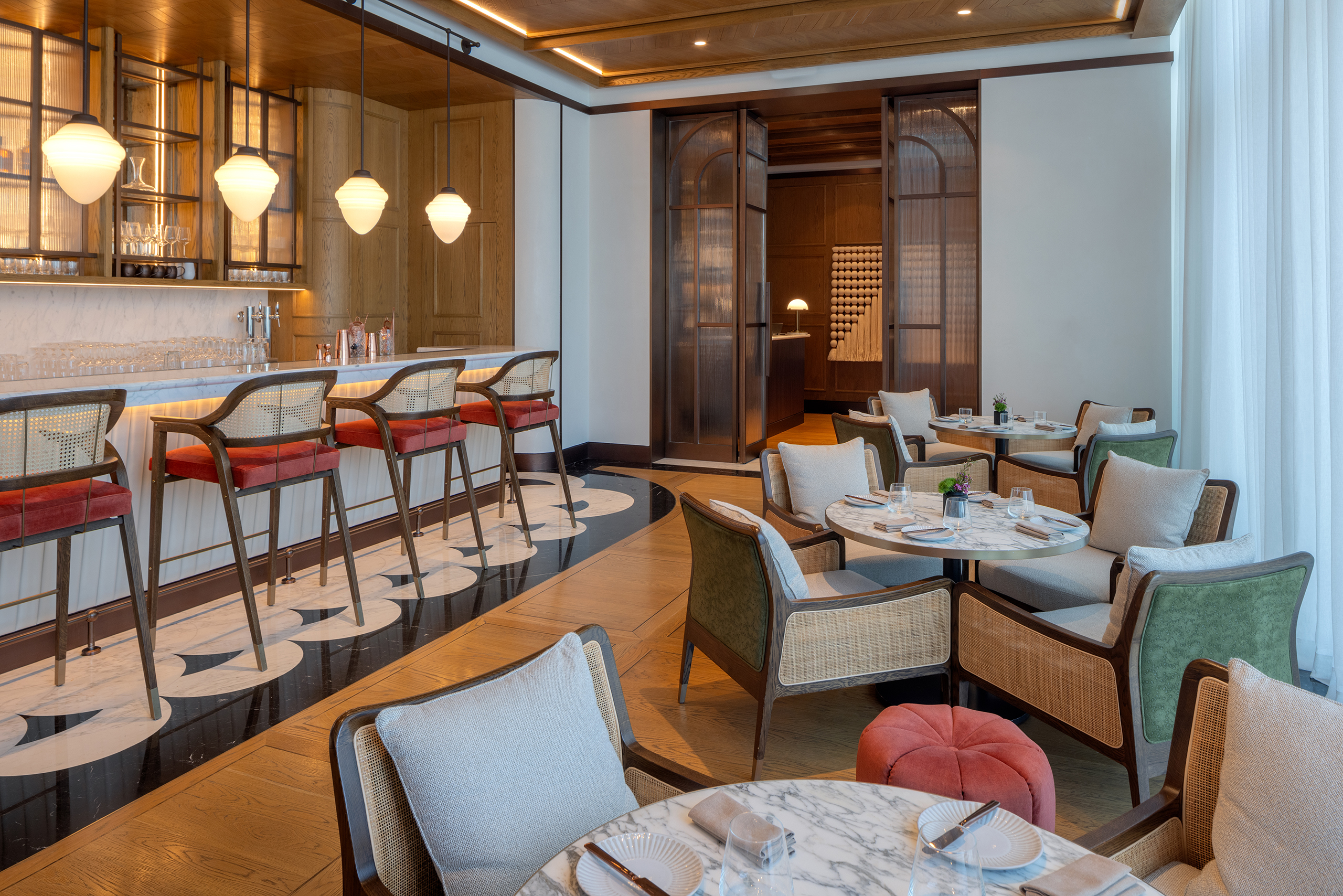
When we started to think about the sequence and experience through the space, we focused on creating moments of light and shadow. As guests arrive, the first moment is a really intimate, timber-lined space. They then move through to a beverage experience — tea, Arabic coffee, fresh juices — before continuing into the main dining room, where they are held between the animated kitchen and the views out onto the terrace and pool. This is where the buzz of the restaurant lives. Finally, the signature private dining room offers something altogether more intimate — the feeling of a dinner party.
[2:20]
The Wimberly Interiors signature is really evident here. We approach every project — large or small — with a deep understanding of the identity and personality of the space, as well as the brand aspirations we are working towards alongside our client and our working relationship with Aldo. The story behind this project was truly remarkable. We had built a great deal of trust and faith in the narrative we had told, bringing both the client and the brand on that journey with us from the very beginning and throughout the five-year process. Not only did we earn their trust — we gave ours in return. And I think that is evident in the creation of this space and the significance of this restaurant.
As a response to the curvaceous architecture and the Waldorf Astoria brand, Wimberly Interiors’ design approach takes inspiration from both the geometric and delicate curved forms of Art Deco design, evident in the spatial planning, wall paneling, detailing, and furniture.
Guests are taken on a journey through a series of rooms each with a defined experience: from the cozy lounge bar on arrival and a variety of intimate dining zones in the main dining room, to the outdoor dining terrace and private dining room complete with chef’s table. Each space ensures no two experiences are similar. The open kitchen is at the heart of the main dining room with a large woodfired grill, adding an element of theatre throughout the day.
Honest and tactile materials such as veined stone and grained oak are balanced by soft accents of brass and aged leather to set the backdrop for an offer that transitions from breakfast to dinner. The color palette connects to a sense of place, where the land meets the sea. The connection with the exterior is reinforced through the radial arrangement of both the indoor and outdoor dining zones, allowing guests to be part of an animated and seamless dining experience.
More Projects