The Future of AI in Architecture
At a glance
The Future of AI in Architecture examines how artificial intelligence and computational design tools are integrated into the firm’s architecture practice. The piece draws on perspectives from Danny Caven, Global Computational Design Lead, and Max Bolton, Regional Computational and Digital Lead for WATG’s London studio. The article argues that AI functions as a creative partner rather than a replacement for designers, and that WATG’s investment in proprietary project data enables more precise, evidence-based client advice across programming, massing, and cost estimation.
The Key Takeaways Summary
Discover how AI is revolutionizing architecture by acting as a creative partner to designers. Learn from WATG experts about using AI for design iteration, the power of proprietary data, and why the future of architecture will be curated by human experts using intelligent tools.
Key takeaways:
- AI as a Creative Partner: AI tools are enhancing, not replacing, designers by acting as “architectural assistants” that accelerate creativity and automate complex tasks.
- The Designer as Curator: Human expertise is more critical than ever to guide AI, provide quality input, and curate the best creative solutions from the generated options.
- Bespoke Intelligence: The true power of AI is unlocked by training it on proprietary, company-specific project data to provide clients with unique, data-driven insights.
- The Future of Buildings: AI, paired with technologies like 3D printing, will enable greater efficiency and ornamentation, leading to a visible change in the aesthetic of future architecture.
Listen to the full conversation:
Danny Caven:
Hi, I’m Danny Caven. I’m the Global Computational Design Lead for WATG.
Max Bolton:
Hi, I’m Max Bolton. I’m the Regional Computational and Digital Lead for our London office.
Danny Caven:
So how I’m engaged with technology day-to-day is primarily with Grasshopper, writing different scripts for different facades or developing different building massings. And then with the influx of AI coming through, using it for renderings and also getting design iterations out, and we can also animate using AI.
Max Bolton:
Yeah, I’m similar to Danny, so focused on Grasshopper for kind of geometry development, but also the Dynamo side for automating repetitive tasks, trying to speed up workflows. And also looking deeper into how AI can influence our business decisions, how we work, and working on the data initiative to start to build up and build out our own internal data so we can begin to design and create custom tools.
With the introduction of AI into kind of the AEC realm, I suppose, one of the biggest and most obvious shifts I think that we’ve seen initially has been with image generation. How we’re beginning to be able to produce more kind of custom images that are more fitting for our own purposes, rather than having to rely on, for instance, Google Search to find precedent images. We can actually now go out and begin to create imagery that really is bespoke and tailored towards the type of projects we work on and the clients we’re working for.
Danny Caven:
Yeah, I agree with Max. And there’s a couple different realms that we can think about how AI is influencing architecture. We could go from, you know, like the LLMs like ChatGPT being our own little assistant, you know, whether it’s going through documents or whatever it might be, or creating custom Python scripts. But with AI image generation, it’s almost like having your own professional rendering company. Like, you can bring in models, start to render it out using AI. So it’s, you know, it’s almost like our little architectural assistant that can, you know, go much faster than a lot of the assistants we have, but it creates different workflows that we’re starting to work with. And, you know, the influence on architecture is we can start to design iterate really quickly using the image generators. And through the use of LLMs, obviously, we can code much quicker.
Max Bolton:
Obviously, with I think all of these AI solutions that we’re seeing coming out now, the biggest emphasis has actually been on kind of a generalization. So having specific data that is intrinsically kind of WATG’s means that we can now begin to actually customize the solutions that we’re providing. This also means that as we’re, you know, building out our own data platform, the insights that we derive are specific towards WATG projects.
And you’ll probably agree with this one, Danny. At the moment, LLMs are kind of at this really broad range of intelligence, so they’re not particularly focused down onto one specific task, for instance. And you see the same with image generation as well. They’re trying to cover all their bases because they’ve been trained across all these different data types. However, once we’ve begun to collect and collate data that’s more focused on WATG, the hospitality realm especially, what we’ll be able to do is actually derive edit insights for clients that are based on past projects that we’ve done, things that we know are successful. So instead of just having to use, say for instance, your generic ChatGPT responses, you’ll probably find that we’re actually going to be able to get very focused results from these kind of new AI tools that we can build ourselves.
Yeah, and it also means that we can pull back on, you know, previous projects. And if clients are coming to us saying, for instance, “Oh, I want a hotel of, you know, this many rooms and with these kind of facilities,” we can now, with kind of confidence, actually look back at our previous projects and say, “Hey, maybe you don’t need to be, you know, this large in your square meters on these particular areas, and we’ve found that actually you want more restaurants, for instance, in these certain markets because we’ve done previous projects in that region and we know that and we can pull it down now and kind of derive results from that as well.”
Danny Caven:
Completely agree, Max. And, you know, I think, like I said previously, you know, we can start to feed the data into LLMs, so say it’s an area program that we need to jet out or have it correct some areas. But, you know, we also, and Max and I worked on a couple projects where we input what a project is and it could give us an estimate of what it’s going to cost. So Max and I worked on a couple of different computational competitions that we literally fed images in, just and gave it materials and all that stuff, and created a generalized estimator. So, you know, we can start to estimate different typologies of things.
But I think in the creative instinct, you know, we can start to feed reference images, for instance, like of different materials and everything within the AI model. So getting out images through AI generation, we can try to influence what the AI models are doing, so we can start to push those models into almost like a funnel, and we start to bring those models towards what we want our image output to be. So influencing the AI has really helped direct it. So taking those broader models and start to sink them in really helps in our workflows.
AI is a creative partner. Like I said previously, you know, we can feed it in pretty basic models and it’s going to iterate different designs. So using it as a creative kind of tool, we’re curating what we want it to do through our prompts or even through our reference images. So it’s really accelerating that iterative process. So it is absolutely creating, you know, an extra tool for us. But, you know, we’re curating at the same time. So we’re giving it the voice, it’s giving us the output.
Max Bolton:
Yeah, and I think this is something that the longer I spend kind of using LLMs and image generation tools and these different AI tools, the more I’m beginning to realize they’re only as good as what you tell them to do, right? So you still need to be a creative person if you want these creative kind of solutions to come out that are not homogeneous in design and kind of bespoke each time you’re using it. And it’s the same goes for when you’re using it, for instance, to code. If you don’t really know the basics, you’re not always going to get the best results out of it. So being able to address this problem, I suppose, with a background already in the creative sector means that actually what we’re getting out is far more focused and actually what we want, rather than us churning out, you know, 10,000 images and then having to pick out 10 of them. Because we kind of naturally want to create a specific style, we’re going to be far more focused on the type of prompts we give, and the selection of the images that come back out is going to be far higher quality.
Danny Caven:
I agree with you on the first part, Max. Like it’s almost like if you don’t know Rhino, it’s going to be really hard to learn Grasshopper. So having the background knowledge of even like Python to be able to fix the code… So going into ChatGPT or whatever LLM to create a Python script, you still have to have the background knowledge to fix the script say if it’s not working, and the same goes for Grasshopper, you need to have the background knowledge to run Rhino. So when we’re using AI, having that kind of extra knowledge of each one of the programs is going to make the AI know higher qualities or give higher quality scripts to you. So, you know, having and also the prompting skill, so you need to be able to kind of prompt in which you want. So if we’re going into an LLM and we want it to do some something crazy, you can’t just put a simple little prompt in there. You need to be pretty specific on how you want it to go.
And we’ve experimented before uploading images to an LLM and having it create a script for it. So LLMs are using machine vision to analyze an image, but you still need to give it a little bit of a prompt to give it a head start on what you want the final output to be.
Max Bolton:
Yeah, 100%. And I think it’s not going to take over the creative kind of jobs or the roles that we play at all. Rather, it, like we were saying earlier, this is just a little assistant in the background for you, right? It’s going to be able to do a lot of things a lot quicker than traditionally you might have to do, making a collage in Photoshop, for instance, if you’re trying to bring together precedent images. And it also allows you to create more original style imagery as well, especially with the image generation side of it, that’s far more focused on what you want. But again, you’re always going to have to come in with an idea in your own head. There’s no point in just, you know, saying, “Hey, give me a picture of a building.” It’s not going to, you know, provide you with anything of, you know, relevance or value. So it’s not like we’re going to ever lose that creative spark internally, I don’t think, and actually that’s only going to help us derive better results from it.
Danny Caven:
I think in the future buildings are going to look a little different. We might get definitely a different style, especially with using AI 3D models, right? So, and through the use of 3D printing coming through. So having, you know, organic ornamentation wouldn’t even surprise me in the future coming onto buildings again. So, you know, that we’re able to use, you know, AI 2D images, make them 3D, and we’re doing this within our computational group here at WATG. We’re literally making AI models in the real world, right, through 3D printing. So bringing that technology into the construction world even more, I think the buildings are going to change a little bit. And AI’s going to influence that just with how it can detail out these 3D models for us. So that integration with 3D printing and AI models and through the translation of Rhino and Grasshopper, you know, we’re able to make literally 2D images to real life, you know, within a day type of thing. So I think the influence of AI within architecture is going to change how we design and how we look at buildings.
Max Bolton:
Yeah, I think we’ll also see probably a change on the engineering side as well. In the same way that you’re seeing even now AI is beginning to push out novel approaches to medicines, you know, finding links in illnesses that we haven’t seen before, I can imagine that this is going to propagate down through into how we physically build buildings as well. You know, we’ll see optimizations in structure or, you know, being able to optimize the layout of your kind of MEP and your HVAC systems, which give us as designers more freedom to experiment more as well in terms of the types of facades that we can, you know, design, or the even, you know, simply down to hopefully we can get thinner slabs on balconies so we can have a sharper, crisper look.
Architecture as a, you know, is always kind of changed its styles as well, right? It’s never stayed in one kind of area. You can see it, you know, from even the 1900s to now, we’ve had a series of different architectural styles. So I will be intrigued to see what this influence and how this influence, now we’ve got these tools that allow us to visualize and describe our ideas better, how they begin to actually filter down into the type of projects we’re going to see in the future.
Danny Caven:
WATG is really open to anything. So experimentation, you know, we’re allowed to do that in our computational group chats. Um, you know, they allow us to experiment with AI and all these different building technology systems. And I think it’s really, you know, it’s encouraging for younger designers, you know, to kind of step up and, you know, talk with us and, you know, have fun throughout their careers. And, you know, at other firms it might be looked down upon, you know, or, you know, they got to always be billable. But WATG really does encourage experimentation and, you know, obviously experimentation comes with new workflows. So having fun and, you know, playing around with computational group chats, we’re able to come up with new workflows, create new ideas, and allow that kind of creativity muscle to, you know, really flourish.
Max Bolton:
Yeah, I think we’re quite forward-thinking, actually, as a company, and you’re seeing this begin to emerge now as we’re building out our own data platform as well, which is going to allow us in the future to, you know, like begin to harness machine learning and build out our own AI solutions based off of the data that we’re capturing as well. So I think we are given that freedom to experiment, but also knowing in the background that we are also building out a very robust system that’s going to really enhance what we can do in the future as well.
Good to chat with you, Danny.
Danny Caven:
Good chat with you, Max.
AI as Creative Partner
The rise of artificial intelligence has sparked conversations in every industry, and architecture is no exception. AI and computational design are already powerful tools in the hands of our designers, accelerating creativity and unlocking new possibilities.
To explore the real-world impact of these technologies, we sat down with two of our leaders in the field: Danny Caven, Global Computational Design Lead, and Max Bolton, Regional Computational and Digital Lead for our London office. They discussed how AI is not replacing the designer, but acting as a powerful creative partner, how WATG is building its own data-driven future, and why a culture of experimentation is key to innovation.
The New Digital Toolkit
Tools like Grasshopper, Dynamo, and AI-powered platforms are integral to our designers’ daily workflow. They are used for automation and exploration of complex geometries and to rapidly iterate on design concepts.
“How I’m engaged with technology day-to-day is primarily with Grasshopper, writing different scripts for different facades or developing different building massings,” explains Danny. “And then with the influx of AI coming through, using it for renderings and also getting design iterations out… it’s almost like our little architectural assistant.”
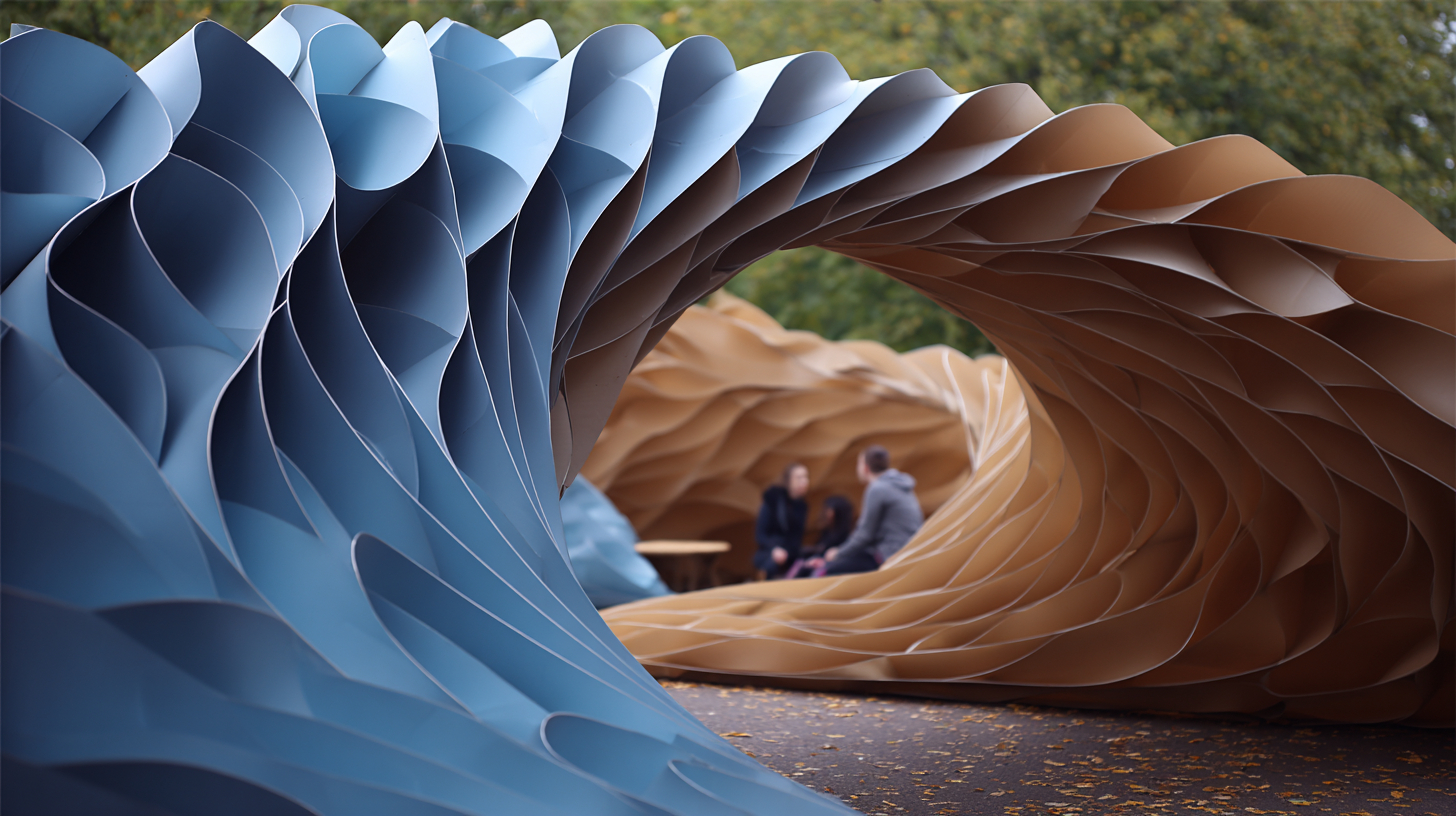
This acceleration of the early design phase is a critical advantage. As Max notes, the initial impact has been profound, especially in visualization. “One of the biggest and most obvious shifts has been with image generation. We can actually now go out and begin to create imagery that really is bespoke and tailored towards the type of projects we work on and the clients we’re working for, rather than having to rely on Google search.”

Building Bespoke Intelligence
While publicly available AI models are impressive, their generalized nature has limitations. The true potential is unlocked by combining these technologies with specialized, proprietary data. This is where WATG is strategically investing in its future.
“Having specific data that is intrinsically WATG’s means that we can now begin to actually customize the solutions that we’re providing,” Max explains. “As we build out our own data platform, the insights that we derive are specific towards WATG projects… better insights for clients that are based on past projects we’ve done, things that we know are successful.”
This data-driven approach allows our teams to advise clients with greater confidence, drawing on decades of project history to inform everything from area programming to cost estimation.
Drawing on decades of project history to inform everything from area programming to cost estimation
Curation Over Creation
A common fear is that AI in architecture will make creative roles obsolete. Both Max and Danny argue the opposite is true: the designer’s expertise is more crucial than ever. The quality of the output is entirely dependent on the quality of the input.
“They’re only as good as what you tell them to do,” states Max. “You still need to be a creative person if you want creative solutions… being able to address this problem with a background already in the creative sector means that actually what we’re getting out is far more focused.”
Danny agrees, drawing a parallel to learning other complex software. “It’s almost like if you don’t know Rhino, it’s going to be really hard to learn Grasshopper. Going into ChatGPT or whatever LLM to create a Python script, you still have to have the background knowledge to fix the script if it’s not working.”
In this new workflow, the designer acts as a curator, using their expertise to guide the AI, filter the results, and steer the project toward a specific creative vision.
The Future of AI in Architecture
So, will AI change what our buildings look like? The answer is a definitive yes. The integration of AI with advanced fabrication methods like 3D printing could herald a new era of architectural expression and efficiency.
“Having organic ornamentation wouldn’t even surprise me in the future coming on to buildings again. We’re literally making AI models in the real world through 3D printing. Bringing that technology into the construction world even more, I think the buildings are going to change,” says Danny.
Max sees a parallel impact on the engineering side. “We’ll see optimizations in structure or… the layout of your MEP and your HVAC systems, which give us as designers more freedom to experiment,” he says. “I will be intrigued to see how this influence will filter down into the type of products we’re going to see in the future.”
Leveraging these powerful tools requires a culture that embraces curiosity and exploration.
An Innovative Culture
Ultimately, leveraging these powerful tools requires a culture that embraces curiosity and exploration.
“WATG really does encourage experimentation,” Danny confirms. “They allow us to experiment with AI and all these different building technology systems… having fun and playing around, we’re able to come up with new workflows, create new ideas, and allow that kind of creativity muscle to really flourish.”
It is this forward-thinking mindset, combined with strategic investment in our people and platforms, that ensures WATG will not just adapt to the future, but will continue to lead in designing it.
About the authors

Danny Caven
Danny is Global Computational Design Lead, with a background that bridges architecture and emerging technology, he develops tools and workflows that make complex ideas more efficient, accurate, and expressive. Danny’s work empowers teams to design with greater insight and precision, transforming data into design intelligence and shaping the next evolution of digital craft.

Max Bolton
Max is Regional Computational and Digital Lead for our London office. As a design innovator, he blends architecture and technology to elevate how WATG imagines and delivers hospitality experiences. Max combines curiosity and technical fluency to bridge the physical and digital, helping teams design smarter, more sustainable, and more inspiring places.
Latest Insights
Perspectives, trends, news.
- News
Six MICHELIN Keys for Five WATG and Wimberly Interiors Hotels

- Design + Innovation
The Future of Design Education
- Project Stories
Connecting Historic Preservation and Wellness Design

- Strategy + Research